Overview
The Arabian tea route is not a single line running from Mumbai to Damascus. It is a network of sea lanes, Red Sea routes, Gulf routes and overland caravan tracks across the Arabian Peninsula. The shared table records eight nodes: Mumbai, Aden, Mocha, Mecca, Damascus, Cairo, and the Gulf branch of Muscat and Dubai. The first six form the main "Indian Ocean–Red Sea–Levant/Egypt" axis; the last two form a separate Gulf branch, and their distances are not added to the main route.
Tea's place in this network changed over time. In antiquity and the Middle Ages, Indian Ocean trade mainly carried spices, frankincense, pearls, textiles, horses and metals. Tea became a bulk commodity much later. From the seventeenth to the nineteenth century, with the expansion of European chartered companies, Indian tea gardens and the Chinese green-tea trade, tea gradually became a familiar goods in Arabian ports and urban markets. The claim that "Arab merchants brought tea into the Arab world on a large scale in the ninth century" lacks reliable evidence; this page does not adopt it.
Tea's relationship with coffee also needs care. Mocha was famous for coffee, and in the eighteenth century it was the main maritime outlet for Yemeni coffee. Tea was one of the goods that later joined the port's trade network. The two sat side by side in warehouses, caravans and tea houses, but the claim that "Mocha was the largest tea collection port in the Arabian Peninsula" has no reliable statistical basis.
History and background
Indian Ocean ports and the tea trade
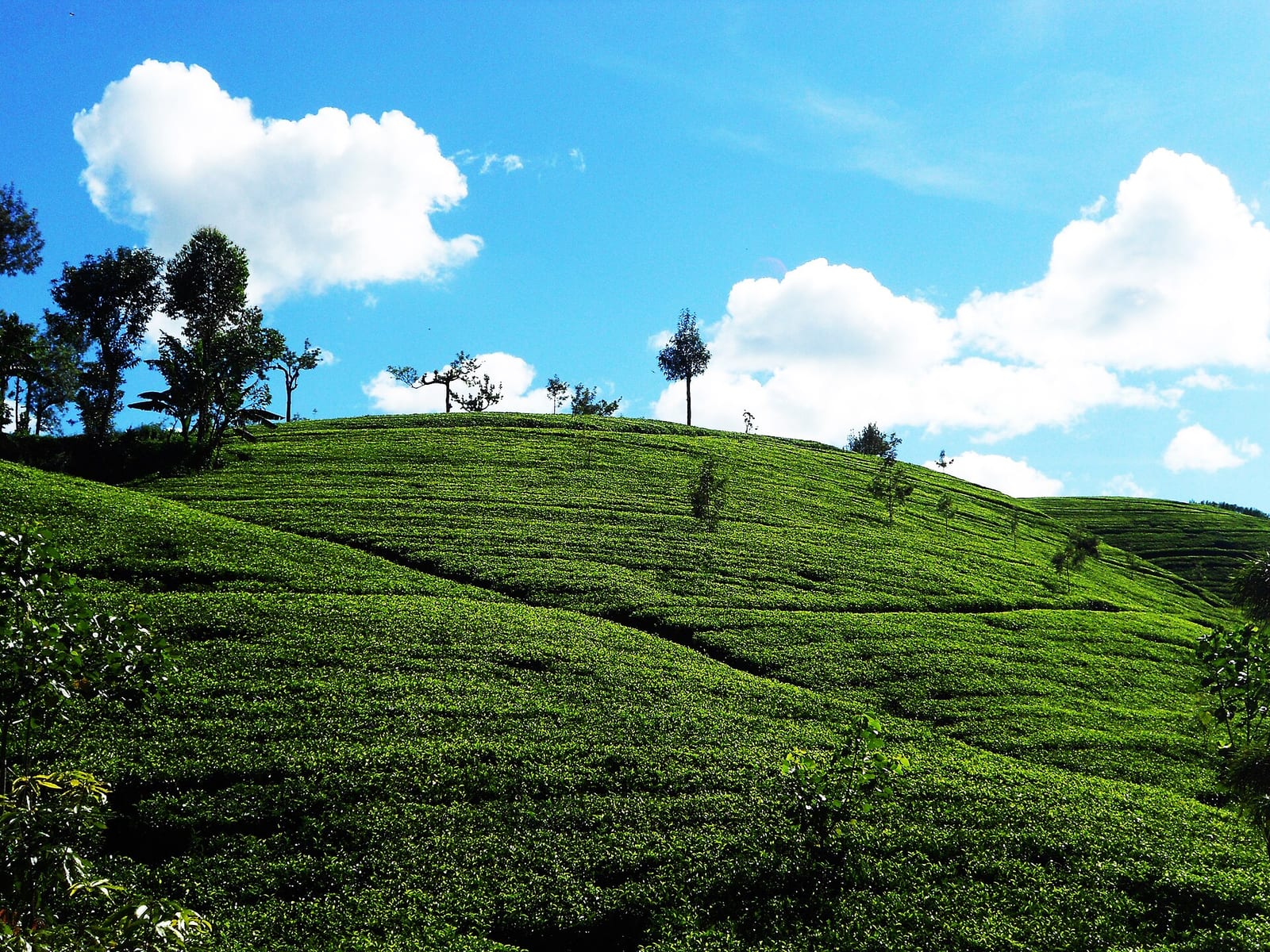
Mumbai was one of the most important port cities on India's west coast. In the nineteenth century, as tea gardens in Assam, Darjeeling and the Nilgiris expanded, Indian black tea was exported through Mumbai to the Arabian Peninsula, the Red Sea and East Africa. The old record says that "the British East India Company maintained large tea warehouses in Mumbai, where Arab merchants bought tea all year round". This fits the general picture of Indian Ocean tea trade, but the scale of the warehouses and the volume of transactions need archival verification.
Aden, at the entrance to the Red Sea, was a key transshipment port between the Indian Ocean and the Red Sea. Goods from India, Southeast Asia and East Africa were unloaded there; some went north through the Red Sea to Suez and the Mediterranean, and some entered the Arabian interior. Tea was one item among coffee, spices, textiles, pearls and leather.
Mocha, on Yemen's Red Sea coast, was the main export port for Yemeni coffee in the eighteenth century. The old record calls it "the largest tea collection port in the Arabian Peninsula". That superlative has no reliable support. A more accurate statement is that Mocha was an important Red Sea trading port where coffee, spices, textiles, jewellery and eastern goods including tea were collected and distributed; tea's importance varied by period and market, and it cannot be equated with coffee.
Dhows and the monsoon
The Arabian dhow was one of the traditional vessel types of Indian Ocean trade. It used a lateen sail, and its hull was built from timber and joined with rope, making it suitable for coastal navigation and monsoon-season crossings. The old record says that dhows "sailed the Indian Ocean for more than two thousand years". That is an exaggerated span; what can be confirmed is that such sailing vessels were used in Indian Ocean trade for a long time, and traditional dhows still operate in the Gulf and off Oman today.
The monsoon set the rhythm of navigation. The southwest and northeast monsoons alternate, ships generally sailed with the wind in particular seasons, and port cities developed corresponding trading seasons. The old record's "November to March" is a composite estimate for avoiding wind, heat and difficult caravan conditions, not the only navigable window.
Caravans and pilgrimage trade
Tea entered the Arabian interior from Red Sea ports by camel caravan. Caravans left Mocha, Aden and other ports, moved north through oases, wells and way stations, and headed for Mecca, Medina, Damascus and the Levant. The old record gives precise figures of "50 to 200 camels, 150 kg per camel, 20 to 30 days". These numbers vary widely across sources, and this page does not adopt them.
Mecca is the holiest city of Islam. The annual pilgrimage brings large movements of people and demand for food, water, accommodation, transport and goods. Tea was one of the goods carried, traded and consumed by pilgrims and merchants, alongside coffee, spices, grain, cloth and souvenirs. The old record calls tea "one of the most important supplies for pilgrims"; that is too strong. A safer statement is that tea had a place in the pilgrimage economy and the Meccan market, but it was not the only or most important supply.
Damascus is a historic Levantine city whose old town, Umayyad Mosque and traditional markets form its urban heritage. Tea entered Damascus from the Red Sea and the Arabian Peninsula and was distributed to Beirut, Amman, Jerusalem and the eastern Mediterranean coast. The old record calls Damascus "the terminus of the Arabian tea route in the Levant". That can be read as one of the western endpoints of the trade network, not the single destination of all tea.
Cairo is the capital of Egypt and an important tea market in Africa and the Middle East. Tea from the Red Sea route entered Cairo across the Suez isthmus; after the Suez Canal opened in 1869, maritime routes changed further. The old record says that "Egypt consumes more than 100,000 tonnes of tea a year and is one of the highest per-capita consumers". The figures and ranking need annual statistical verification, and this page does not adopt them.
The Gulf branch
Muscat, on the Gulf of Oman, was an important port on the east coast of the Arabian Peninsula. UNESCO's Land of Frankincense describes how the ports and caravan oases of southern Oman connected the Mediterranean, the Red Sea, Mesopotamia, India and China; the ancient city of Qalhat bears witness to the east Arabian coast's trade with India, China and Southeast Asia between the eleventh and fifteenth centuries. Tea entered the Gulf later, but Muscat, Sohar and Hormuz had long been gateways for Indian Ocean goods entering the Arabian interior.
Dubai lies on the southern shore of the Persian Gulf. Dubai Creek was a hub for pearls, spices, textiles and food in the early twentieth century. Today the DMCC Tea Centre provides storage, blending, packing and trading services; DMCC's website says the facility handles about 43,000 tonnes of tea a year and that the UAE is one of the world's largest tea re-exporters. That modern figure belongs to contemporary trade statistics and cannot be projected back to the eighteenth century.
The Gulf has its own tea style. Karak chai is usually made with strong black tea, condensed milk, sugar and spices such as cardamom, and is popular in the UAE, Qatar, Oman and South Asian migrant communities. It belongs to twentieth-century migration and urban food culture, not to a direct continuation of ancient caravan tea.
Tea, spice and sugar
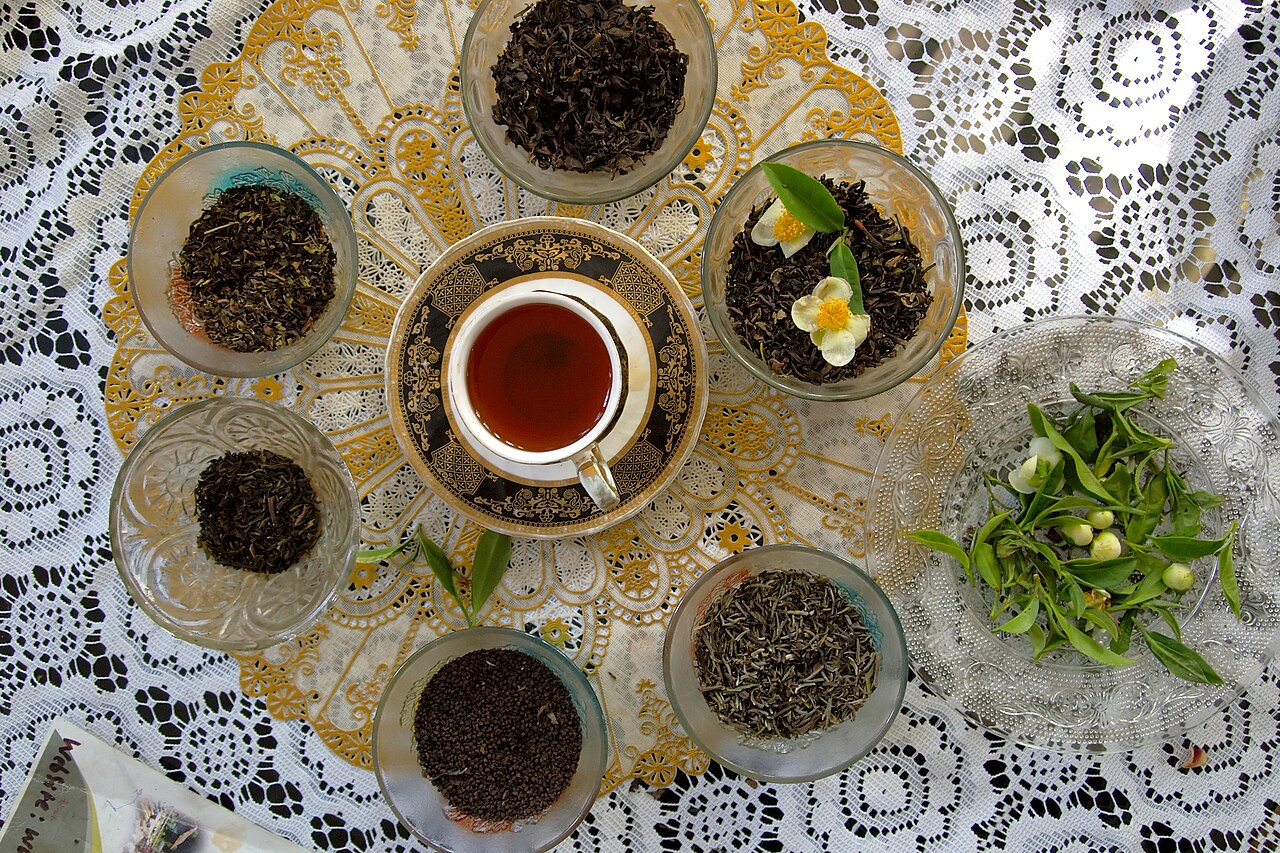
Tea in the Arab world is known for spice and sugar. Cardamom, cinnamon, cloves, saffron, mint and rose water may all be added; sugar is often used generously. The old record says that "three or four spoons of sugar in a glass is normal". That is a food observation, not a statistical conclusion. Sweetness varies greatly by country, city and household: Moroccan mint tea is sweet, Egyptian black tea is often sweetened, and Gulf karak is sweeter because of condensed milk.
"Arabian spiced tea" is a convenient umbrella term, not a single recipe. Yemen, Saudi Arabia, Oman, the UAE, Egypt, Lebanon and Syria each have their own tea traditions. Reducing the whole Arab world to one "spiced tea" flattens those differences.
The route today
The Arab world remains an important market for tea consumption and re-export. Egypt, Morocco, the UAE, Saudi Arabia and Iran are all large tea importers; Dubai, with its free zones, warehousing and air logistics, is an important node for tea blending and re-export to Africa and the Middle East. The old record says that "the DMCC Tea Centre handles more than 40 million kilograms of tea a year". DMCC's current website gives about 43,000 tonnes, or 43 million kilograms; the two are close in order of magnitude, but the years and definitions differ. This page uses DMCC's own "about 43,000 tonnes" and labels it as such.
The contemporary form of the route is container ships, bulk carriers, air cargo and free-zone warehouses rather than dhows and camel caravans. Yet ports, bazaars, tea houses and hospitality still form its cultural surface: from the markets of Mumbai to the old towns of Aden and Mocha, and from the tea houses of Damascus and Cairo to those of Dubai, tea remains part of urban public life.
Route and scope
The station table follows the order of the old route. Cumulative distance, duration and terrain are given below. Coordinates are historical route data; the map and elevation profile are reading aids, not modern navigation.
Legacy difficulty: extreme — Indian Ocean monsoons, Red Sea navigation, the Arabian Desert and long overland stages.
Legacy distance: about 5,000 km across the Mumbai–Mocha–Cairo/Damascus sea-and-land route; the Gulf branch is counted separately.
Legacy duration: three to six months round trip by sailing vessel and camel caravan (historical estimate).
Legacy best season: November–March, avoiding desert heat and the Indian Ocean monsoon.
Terrain: Indian Ocean sea lanes, Arabian Sea, Red Sea, Persian Gulf and Arabian Desert caravan tracks.
Stations
The stations below use the same node_id as the shared route table. Maps and elevations are reading aids, not a substitute for field data.
01 · Mumbai
Cumulative distance about 0 km; elevation about 10 m; coordinates 18.94, 72.84. Context: legacy route data, not a modern navigation track.
The starting point. Mumbai is a port and commercial centre on India's west coast. After the expansion of Indian tea gardens in the nineteenth century, black tea was exported through Mumbai to the Arabian Peninsula, the Red Sea and East Africa. The old record calls Mumbai "India's black-tea export centre". That fits the general trade history, but the specific scale of the "British East India Company warehouses" needs archival support.
02 · Aden
Cumulative distance about 1,800 km; elevation about 0 m; coordinates 12.80, 45.03. Context: legacy route data, not a modern navigation track.
Aden sits at the entrance to the Red Sea and was an important transshipment port between the Indian Ocean and the Red Sea. Tea, coffee, spices, textiles and pearls were unloaded and transshipped there. The old record says that "Indian and Chinese tea was unloaded here, some going north through the Red Sea to Suez and some entering the Arabian interior by land". This follows the basic logic of the port network, but the exact proportions of the cargo flow cannot be quantified.
03 · Mocha
Cumulative distance about 2,000 km; elevation about 20 m; coordinates 13.32, 43.25. Context: legacy route data, not a modern navigation track.
Mocha is an old Red Sea port in Yemen, famous for coffee. In the seventeenth and eighteenth centuries it was the main maritime outlet for Yemeni coffee and also a collection point for spices, textiles and eastern goods. The old record calls it "the largest tea collection port in the Arabian Peninsula". That superlative lacks a statistical basis; this page keeps Mocha's status as an important Red Sea trading port without making tea the port's dominant cargo.
04 · Mecca
Cumulative distance about 2,400 km; elevation about 300 m; coordinates 21.42, 39.83. Context: legacy route data, not a modern navigation track.
Mecca is the holiest city of Islam; the pilgrimage season brings large movements of people and demand for goods. Tea is one of the goods consumed and traded by pilgrims, merchants and residents, alongside coffee, spices, grain, cloth and souvenirs. The old record calls tea "one of the most important supplies for pilgrims". That is too strong; tea has a place in the pilgrimage economy, but it is not the only or most important supply.
05 · Damascus
Cumulative distance about 3,000 km; elevation about 700 m; coordinates 33.51, 36.29. Context: legacy route data, not a modern navigation track.
Damascus is a historic Levantine city whose old town, Umayyad Mosque and traditional markets form its urban heritage. Tea entered Damascus from the Red Sea and the Arabian Peninsula and was distributed to Beirut, Amman, Jerusalem and the eastern Mediterranean coast. The old record calls Damascus "the terminus of the Arabian tea route in the Levant". It can be understood as one of the western endpoints of the network, but not the single destination of all tea.
06 · Cairo
Cumulative distance about 4,000 km; elevation about 20 m; coordinates 30.04, 31.24. Context: legacy route data, not a modern navigation track.
Cairo is the capital of Egypt and an important tea market in Africa and the Middle East. Tea from the Red Sea route entered Cairo across the Suez isthmus; after the Suez Canal opened in 1869, maritime routes changed further. The old record says that "Egypt consumes more than 100,000 tonnes of tea a year and is one of the highest per-capita consumers". The figures and ranking need annual statistical verification, and this page does not adopt them.
07 · Muscat
Cumulative distance about 1,800 km; elevation about 10 m; coordinates 23.59, 58.38; branch gulf. Context: legacy route data, not a modern navigation track.
A Gulf branch node. Muscat, on the Gulf of Oman, is an important port on the east coast of the Arabian Peninsula. UNESCO's Land of Frankincense describes how the ports and caravan oases of southern Oman connected the Mediterranean, the Red Sea, Mesopotamia, India and China; Qalhat bears witness to the east Arabian coast's trade with India, China and Southeast Asia between the eleventh and fifteenth centuries. Tea entered the Gulf later, but Muscat was long a gateway for Indian Ocean goods entering the Arabian interior.
08 · Dubai
Cumulative distance about 2,200 km; elevation about 5 m; coordinates 25.20, 55.27; branch gulf. Context: legacy route data, not a modern navigation track.
A Gulf branch node. Dubai Creek was a hub for pearls, spices, textiles and food in the early twentieth century. Today the DMCC Tea Centre provides storage, blending, packing and trading services; DMCC's website says it handles about 43,000 tonnes of tea a year and that the UAE is one of the world's largest tea re-exporters. The old record says that "Dubai Creek has been a trade route between the Arabian Peninsula and India since ancient times". That can be read as a long port tradition, but the scale of ancient and modern trade should not be conflated.
Trade teas
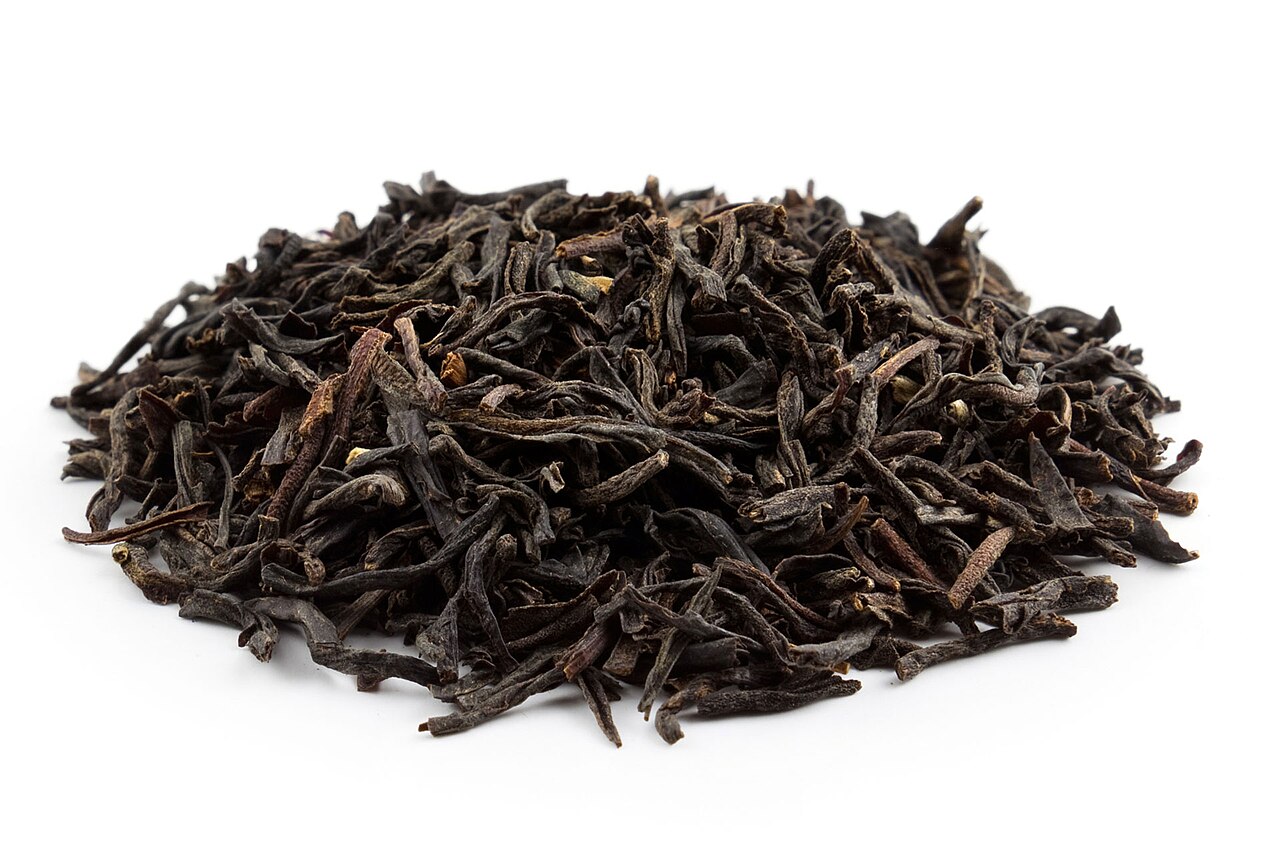
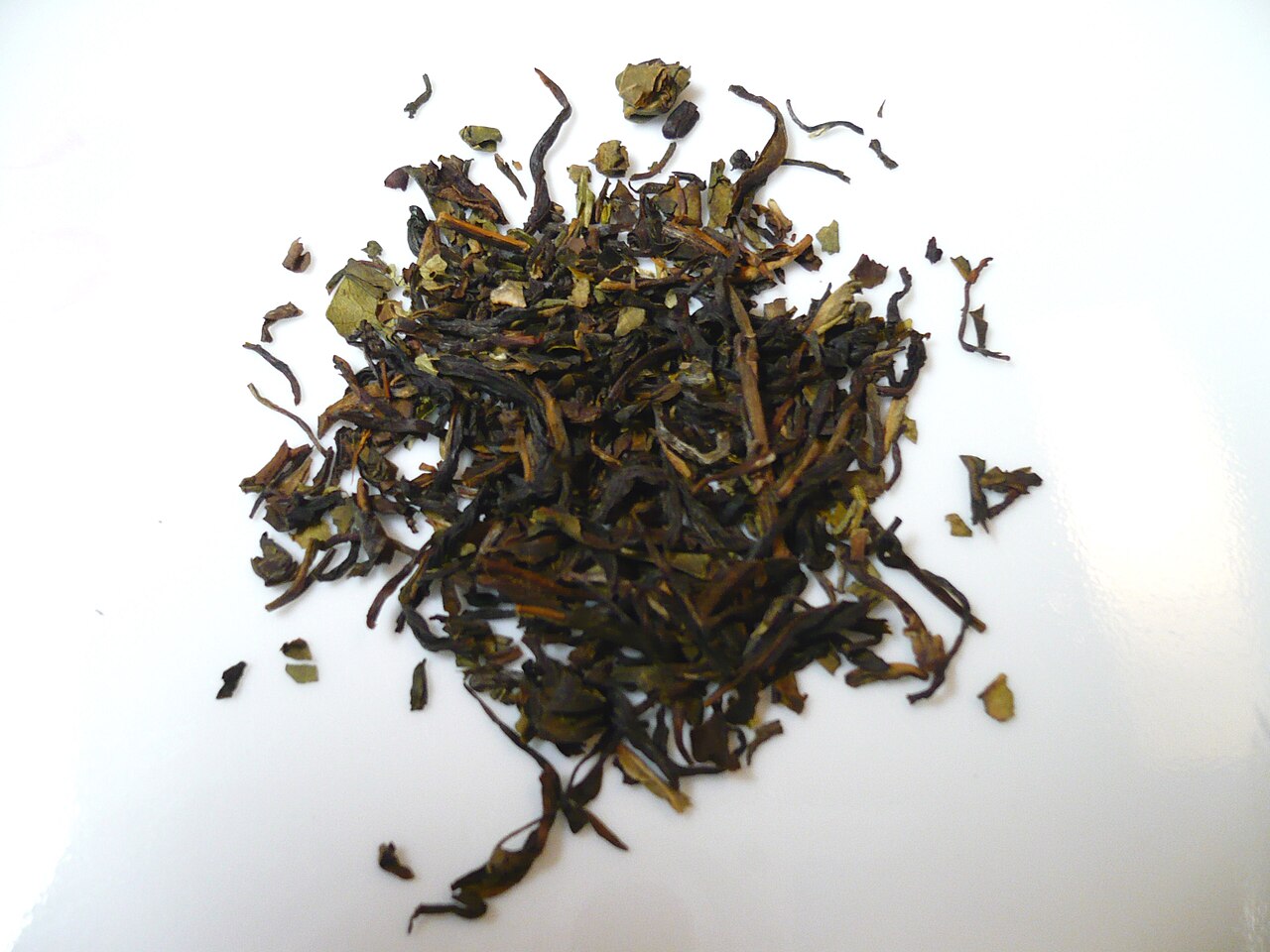
Teas recorded by the old route: Indian black tea, Chinese green tea and Arabian spiced tea.
Linked tea entries:
- Assam black tea
- Darjeeling black tea
- Nilgiri black tea
- Moroccan mint tea
- Ceylon high-grown black tea (legacy reference
ceylon-black) - Pingshui gunpowder green tea (legacy reference
gunpowder)
Note: "Arabian spiced tea" is a prepared drink and a flavour category, not a tea cultivar. Indian, Chinese, Ceylonese and Kenyan teas may all appear in Arab markets; the blend changes with port, merchant and consumer market.
Visiting notes
Distances, duration and difficulty come from the legacy record and are kept in their historical context. This first edition does not provide step-by-step navigation, current road conditions or modern trekking safety guarantees. Security, visa and shipping conditions in the Red Sea, Gulf of Aden, Persian Gulf and the Arabian interior must be checked against current rules; Mecca and its surroundings have special management rules during the pilgrimage.
Sources
- Land of Frankincense — UNESCO World Heritage Centre
- Ancient City of Qalhat — UNESCO World Heritage Centre
- DMCC Tea Centre — DMCC
- Migrated legacy record:
zh/route/arabian-tea-route.json