Overview
The Darjeeling Himalayan Railway runs for about 88 kilometres from Siliguri, on the plain at the foot of the Himalaya, to Darjeeling at roughly 2,200 metres. It was opened in 1881 as a 610 mm narrow-gauge line. UNESCO inscribed the Darjeeling line, together with the other mountain railways of India, in 1999.
The railway is often called a “tea railway”, and that description is partly fair: it was built in the same decades in which the Darjeeling gardens were expanding, and it gave tea chests and passengers a faster way down to the broad-gauge network at Siliguri. But the train is not a tea-processing method. It did not manufacture Darjeeling tea, and a journey on it does not explain why the tea tastes the way it does. The railway carried the crop; the gardens, factories and weather made it.
History and background
The line was built between 1879 and 1881 to connect the growing hill station and its tea estates with the plains. Steam locomotives still climb the grades at less than 20 kilometres per hour. Its engineers used a narrow gauge, tight curves, reversing sections and spiral loops to gain height in a landscape that offered little room for a conventional railway. The result was not a fast main line but a slow, spectacular mountain route.
Tea was the reason for the line. British planters had opened gardens on the southern slopes of the Himalaya from the 1840s, and made tea had to reach Calcutta for auction and export. Before the railway, chests went down by pony, porter and palanquin, a slow and expensive journey. In 1879 the government approved a narrow-gauge line from Siliguri; it opened in 1881, and a tea merchant could then leave Calcutta, change at Siliguri and reach Darjeeling the same day.
The engineering is more extreme than the toy-train name suggests. The line rises from about 100 metres at Siliguri to 2,200 metres at Darjeeling, with a maximum gradient of 1:18. Its 610 mm gauge is roughly a quarter of standard gauge. To gain height, the line uses reversing sections and spiral loops rather than one continuous climb. The result is slow, but it works.
Darjeeling tea itself developed from the 1840s and 1850s onward, after tea cultivation spread into the eastern Himalaya. The gardens found a market in Calcutta and, later, in London. The railway shortened the journey to the plains and made it easier to move people, mail, stores and tea chests. In the twentieth century the line became a symbol of the hill station as much as a working transport link.
The district’s tea also began with Chinese seed. In 1841 a British plant collector, usually named as Campbell, is said to have brought seed from China and planted it at Darjeeling; the story is a local origin narrative rather than a fully documented trial. By the later nineteenth century the district had more than 80 gardens. The best-known cluster lay around Kurseong: Castleton, Margaret’s Hope and Makaibari, the last founded in 1859. Margaret’s Hope is said to be named for a garden owner’s daughter who came from Britain, fell in love with the place and died on the voyage home. The story is repeated everywhere; the tea itself is a fact.
UNESCO’s citation treats the railway as a living heritage ensemble rather than a museum piece. That is the right frame: the line still uses much of its historic alignment, and the landscape through which it runs is still a working tea landscape, even if the balance between freight, passengers and tourism has changed.
The Batasia Loop is the line’s set piece. The train spirals once around a loop to gain height, and the open ground at the centre gives a 360-degree view of Kangchenjunga (8,586 m). A Gurkha war memorial stands in the loop, commemorating soldiers who served in the British Indian Army. Steam haulage survives because it is maintained: the workshops at Tindharia keep locomotives more than a century old in service, and drivers still fire, regulate and brake by hand on the grades.
Route and scope
The shared station table records six nodes: Siliguri, Sukna, Tindharia, Kurseong, Jorebunglow (the Batasia Loop area) and Darjeeling. The table’s distances are cumulative and its elevations are station elevations, not a continuous survey. The diagram is a reading aid, not a navigation track.
A full run takes roughly six to eight hours depending on the service, the locomotive and the condition of the line. Landslips, track work and weather can interrupt services; anyone planning a journey should check the current operator’s timetable rather than treat the historic schedule as a promise. Some tourist services cover only part of the line, and the steam-hauled “toy train” experience is not the same as a scheduled passenger service.
Stations
The stations below use the same node_id as the route fact table. The map and elevation profile are reading aids, not a substitute for field data.
01 · Siliguri
Siliguri is the junction with the plains. Broad-gauge trains from Calcutta and elsewhere in India terminate or stop here, and passengers change to the narrow-gauge mountain line. The town is also a transport hub for the Darjeeling hills and a collecting point for tea moving down from the gardens. The contrast is immediate: the railway leaves a hot, low plain and begins to climb into a different climate.
02 · Sukna
Sukna, about ten kilometres from Siliguri, is where the line begins to leave the plain properly. The gradient steepens, the forest closes in, and the first tea gardens appear on the slopes. The reversing sections begin in this stretch. A train does not turn around on a turntable; it runs forward into a dead-end siding, reverses direction, and continues climbing on the next leg. The manoeuvre is slow, and it is one of the reasons the journey takes so long.
03 · Tindharia
Tindharia is the railway’s workshop stop. Locomotives and rolling stock have been maintained here, and the workshops are part of the line’s industrial heritage. The station is not a tea centre in the same sense as Kurseong, but it explains how a nineteenth-century mountain railway has survived: through constant, often improvised maintenance. Preservation depends on skills and spare parts as much as on heritage designation.
04 · Kurseong
Kurseong, at about 1,400 metres and roughly 52 kilometres from Siliguri, sits in the middle of the Darjeeling tea country. Several well-known gardens lie in the surrounding hills, including Castleton, Margaret’s Hope and Makaibari. The town is a market and administrative centre as well as a railway stop. Its station is a good place to read the relationship between the line and the gardens: tea chests, workers, stores and tourists all pass through the same narrow corridor.
05 · Jorebunglow and the Batasia Loop
Jorebunglow, usually associated with the Batasia Loop, is the scenic set piece of the line. The railway spirals around a loop to gain height, and the open ground at the centre gives travellers a wide view toward Kangchenjunga, the world’s third-highest mountain at 8,586 metres. A war memorial stands in the loop. The view is weather-dependent: on a clear morning the snow range is immense; on a monsoon afternoon there may be nothing but cloud.
06 · Darjeeling
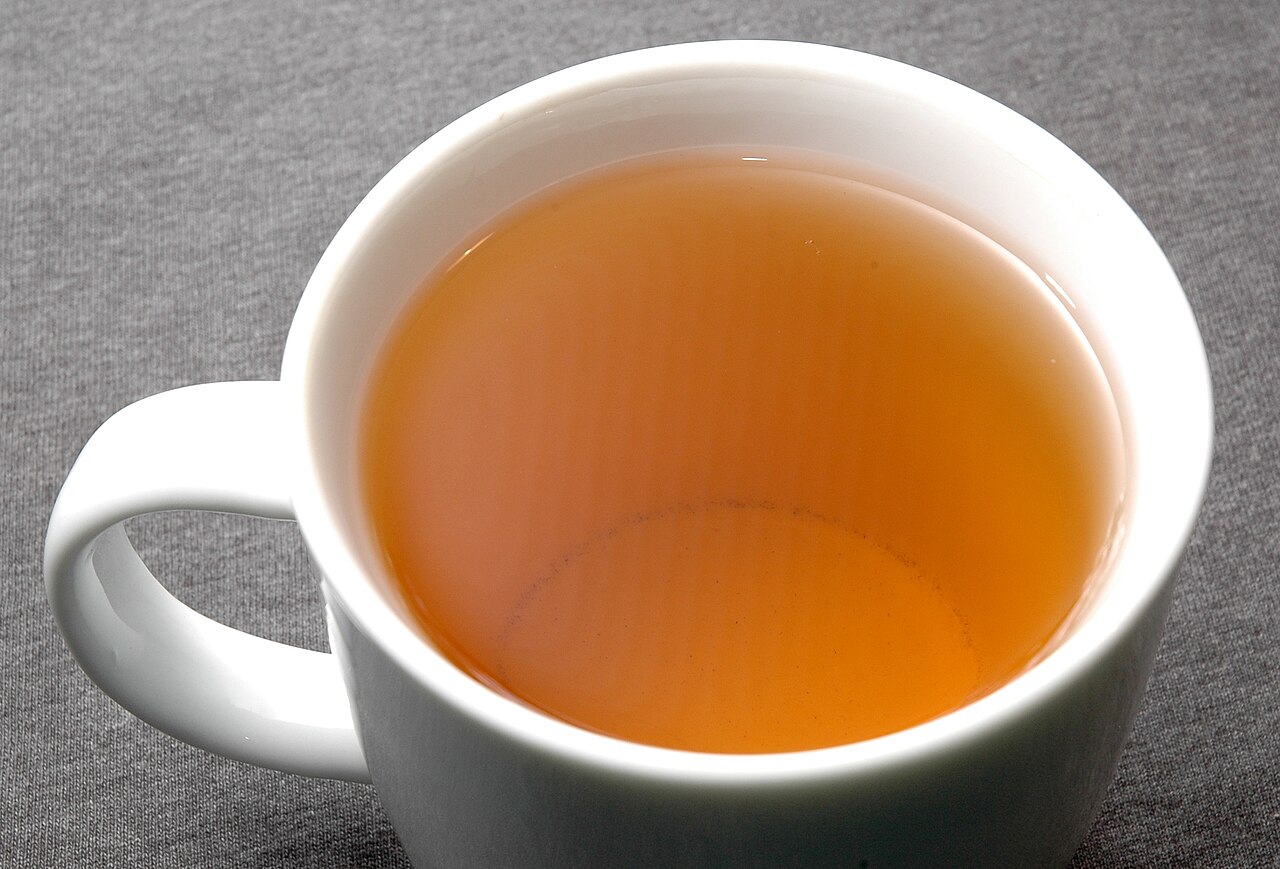
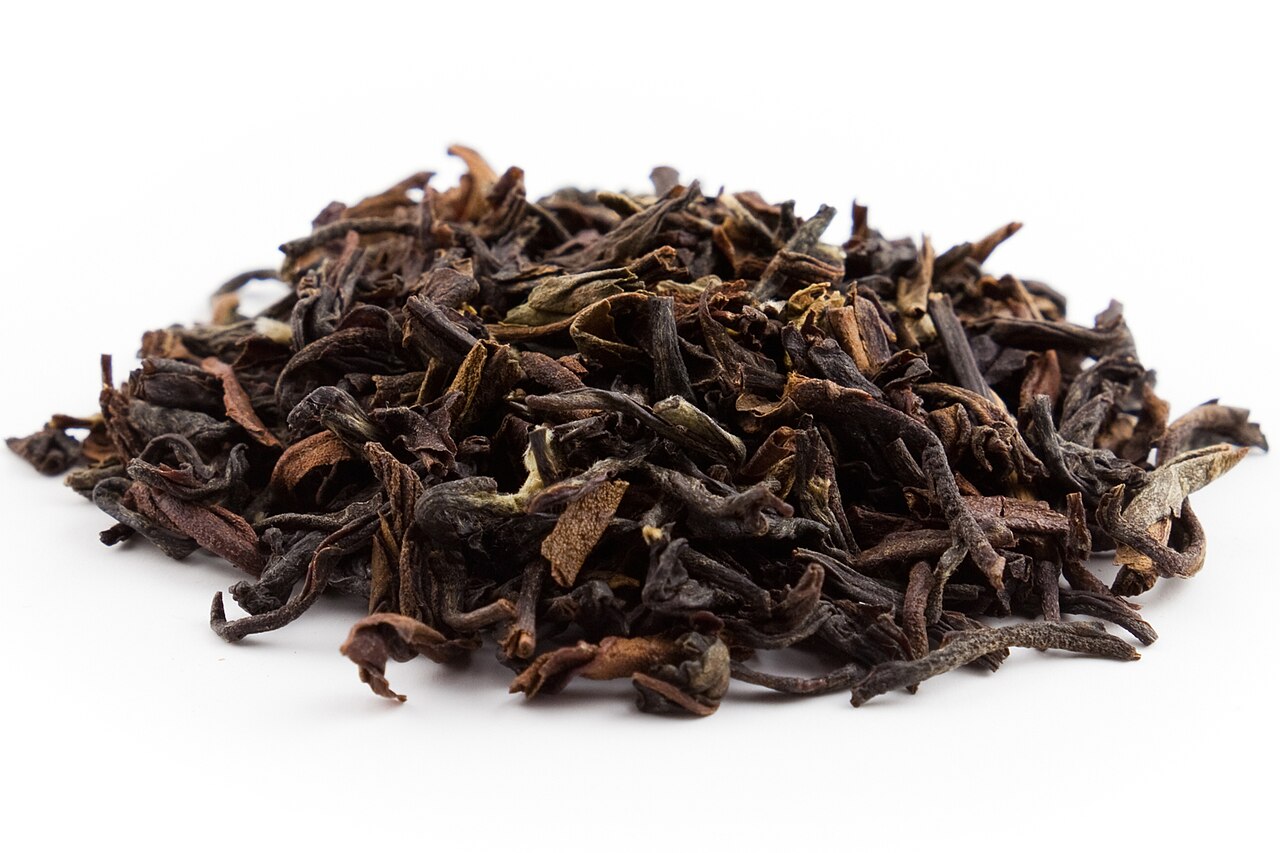
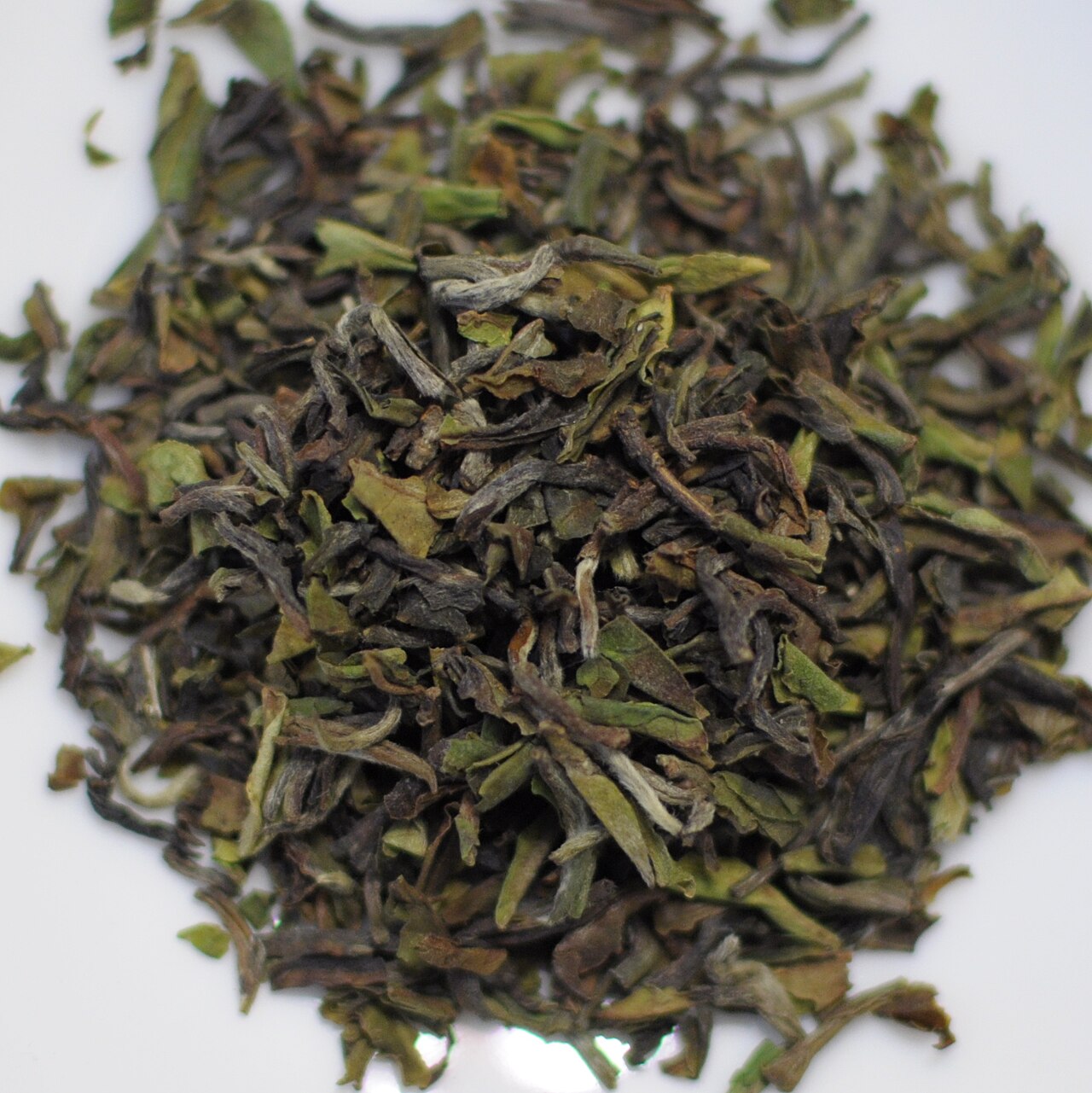
Darjeeling, at about 2,200 metres, is the terminus and the name that made the tea famous. The town grew as a hill station, with a promenade, schools, monasteries, markets and a cool climate. The tea gardens below and around it produce the teas sold as Darjeeling: a spring first flush picked from March into April, a second flush in May and June, and smaller quantities of autumnal and white teas.
The “muscatel” character associated with second flush is a description of aroma, not a added flavour. It varies by garden, elevation, cultivar and season. Nor does every garden produce every style. A route page can introduce the landscape; it cannot guarantee what a particular estate will sell in a given year.
Trade teas
The railway corridor is associated with Darjeeling first flush, second flush, muscatel-style lots, Darjeeling white tea, Sikkim temi and Kangra green tea. These are trade and regional associations, not a claim that each station produces each tea. Darjeeling’s geographical indication protects the name within its defined gardens; Sikkim and Kangra teas come from different producing areas and should not be folded into “Darjeeling” for convenience.
Linked tea entries:
- Darjeeling first flush
- Darjeeling second flush
- Darjeeling muscatel
- Darjeeling white tea
- Sikkim temi
- Kangra green tea
Visiting note
The railway is a heritage experience rather than a hiking route. Travelers should check the current timetable, confirm whether a service is steam- or diesel-hauled, and allow for delays. The line crosses a densely settled and ecologically sensitive hill landscape; photography and waste should follow local rules. The diagram on this page is not a substitute for a current railway map.
Sources and status
This English article is a full English edition of the Chinese route record, checked against UNESCO, Indian Railways, the Darjeeling district administration and the Tea Board of India. It is marked reviewed for bilingual source-check and claim-boundary purposes on 2026-11-22. It does not claim to be a complete history of the railway or of every garden in the Darjeeling hills.