Grand Canal Tea Route is a tea route. Focus on origin, nodes, goods, transport and destination, not a travel itinerary.
Key points
- Grand Canal Tea Route is a tea route. Focus on origin, nodes, goods, transport and destination, not a travel itinerary.
- Separate concept, variables and setting before copying a parameter.
- With mould, sourness, clumping or unknown source, prioritise food safety.
Context
This page places Grand Canal Tea Route inside the framework of 茶路: what problem it solves, which variables matter, and how to judge the result.
Separate the materials
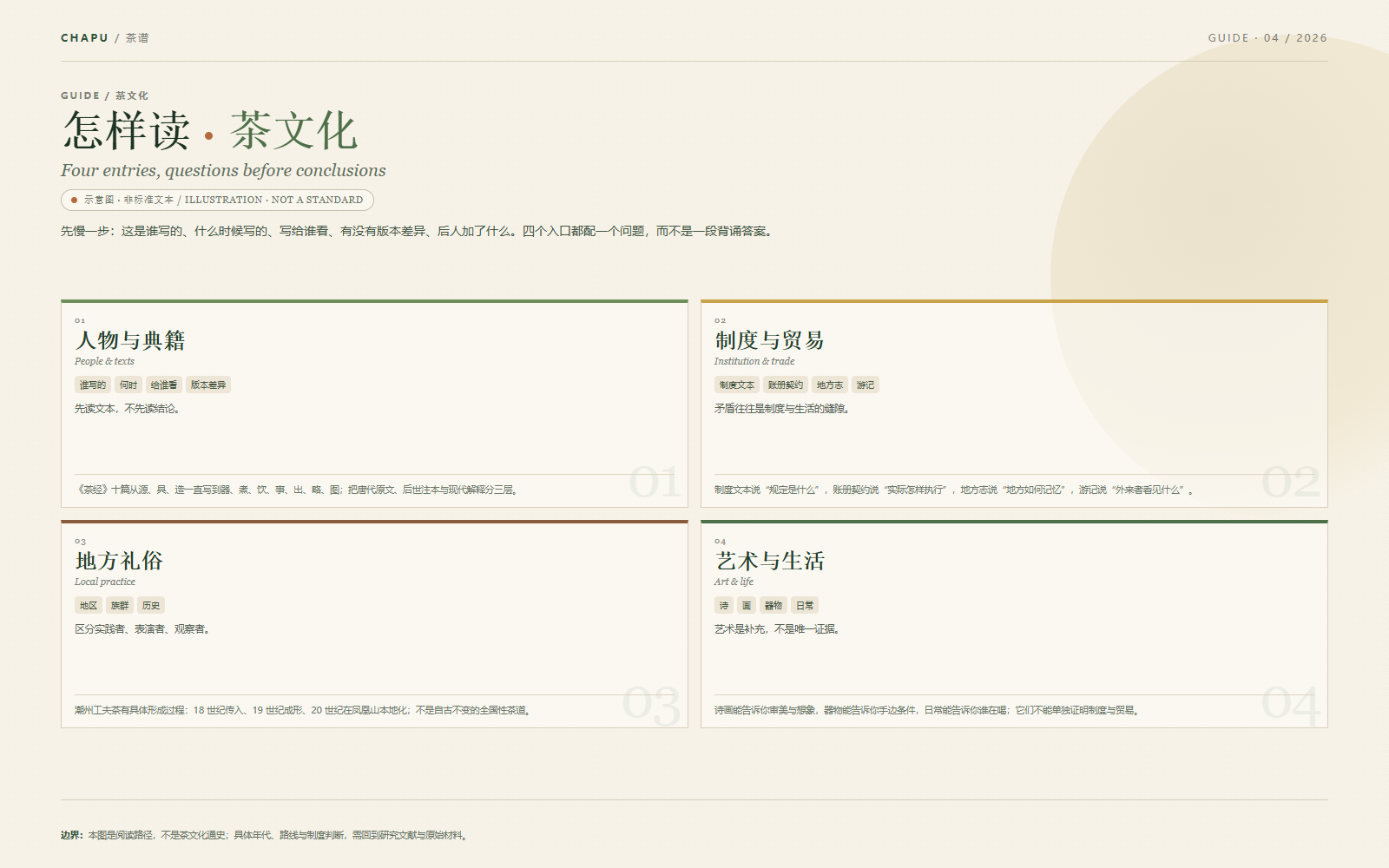
Cultural entries use at least three kinds of material: primary texts, historical records and later interpretation. Their evidential strength differs and they cannot replace one another.
Context and evidence
When date, author or edition is disputed, present the alternatives and mark the dispute instead of choosing the prettier version as fact.
How to read it
Place the practice back into institutions, class and daily life. The more refined the ritual, the more important it is to ask who did the labour and who was excluded.
Common misreadings
- “Legend is history”: Legend reflects local imagination, not automatically dates and persons.
- “One country, one way of drinking”: Region, class and community produce different practices.
Practical advice
List primary and secondary materials separately; present date conflicts side by side; keep biographical pages to tea-related work; compare function before form.
Source boundary
This page can establish the need to separate text, record, oral memory and image. It cannot turn every local claim into history or reconstruct a whole ritual from one picture.
Key takeaway
The Grand Canal route moved tea as tax, tribute and merchandise along China’s north-south spine. Grain, salt and tea shared barges, locks and officials; the canal made bulk movement cheap, and its decline shifted trade to coast and rail.