Overview
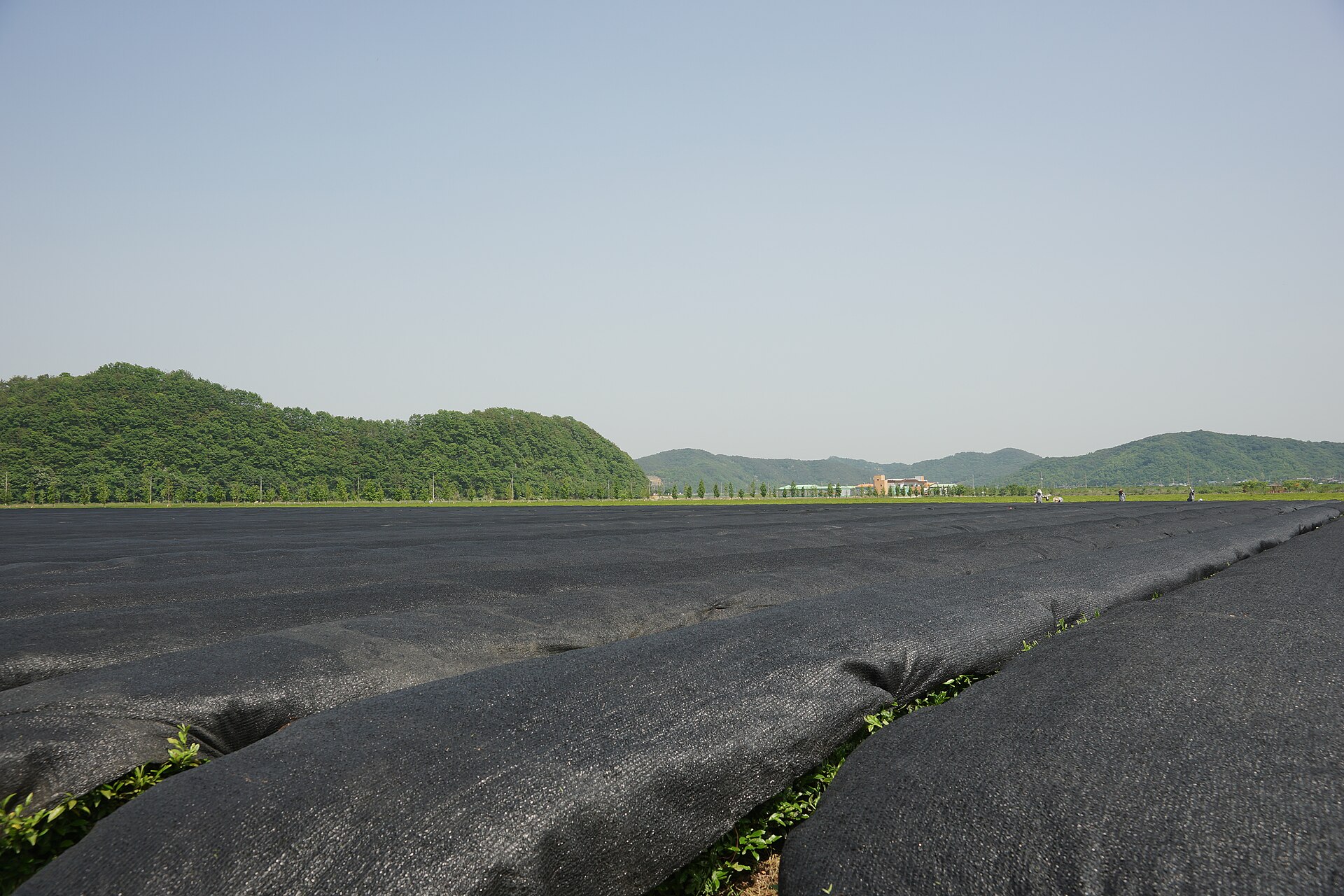
The Korean tea road is not a single historic highway. It is a mountain-to-coast geography of tea: the temple gardens of Jirisan, the wild tea woods of Hadong, the terraced plantations of Boseong, the old Silla capital of Gyeongju and the volcanic island of Jeju. The shared table records eight nodes over about 500 kilometres: Hwaeomsa on Jirisan, Gurye, Hadong, Boseong, Suncheon, Daegu, Gyeongju and Seogwipo on Jeju.
The route is best understood as a cultural itinerary, not a caravan road. Korean tea culture grew through Buddhist monasteries, royal courts, literati studies and local farming communities. The modern road and rail network makes the nodes easy to visit, but the old walking and horse tracks are fragmented. The diagram is a reading aid, not a navigation guide.
History and background
The best-known origin story in Korean tea history is the return of tea seeds from Tang China in 828. According to the Samguk Sagi, during the Silla period (57 BCE–935 CE) the Silla king Heungdeok sent an envoy, Kim Dae-ryeom, to Tang; on his return he brought tea seeds, which were planted on Jirisan. The mountain rises to 1,915 metres, with cloud, mist and well-drained soils that suit tea. This is the first clearly recorded tea planting in Korean history, and it is the reason Jirisan is treated as a founding landscape. The record does not prove that tea was unknown before 828. Buddhist monks travelling between Tang and Silla had already encountered tea, and the earliest Korean tea culture was closely tied to monastic practice. In the seventh century the Silla monk Jajang is said to have returned from Tang and planted tea at Bulguksa in Gyeongju, a tradition that predates the 828 court record.
The Goryeo period (918–1392) was a high point of Korean tea culture. The court maintained tea ceremonies, and celadon tea bowls and ewers from Goryeo kilns are among the most admired ceramics in East Asia. Tea was also part of monastery life: offerings before buddhas, tea meetings and meditation rituals. The old record describes a “tea office” and “tea mothers” at court. Those titles are plausible for court service, but this page treats them as an old description rather than a fully documented institution.
The Joseon period (1392–1910) brought a Confucian state and a policy that favoured Confucianism over Buddhism. Many monasteries lost patronage, but tea practice did not disappear. Temple tea ceremonies, literati tea gatherings and local tea societies continued. The nineteenth-century monk Choui (1786–1866), based at Cheoneunsa in Gurye, is the central figure of the later tradition. He wrote the Dongda Song (“Song of Eastern Tea”) and the Dasinjeon (“Biographies of Tea Spirits”), and his ideas shaped modern Korean tea practice. His four-character summary — correctness (jeong), clarity (cheong), harmony (hwa) and stillness (jeong) — is widely used by Korean tea organisations, though it is a later interpretation rather than a quotation from his own writings. From around 1800, Choui and other figures helped revive tea culture among lay communities, and the tea rite (darye) became part of modern Korean cultural identity.
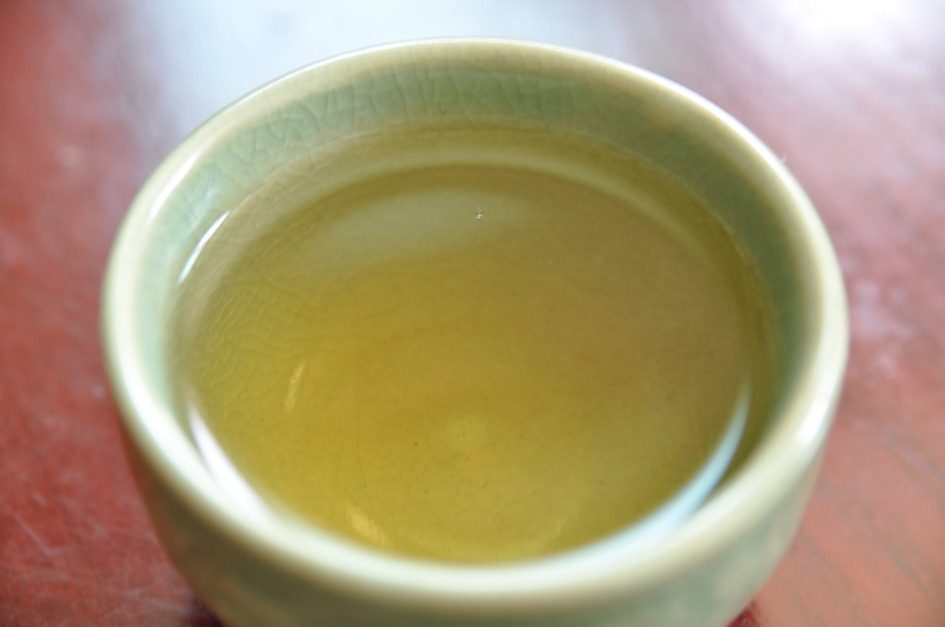
Korean green tea is usually classified by picking time. Woojeon is the earliest spring pick, followed by seitak, jungjak and daejak. The names are grade and season categories, not different cultivars. The old record also lists matcha, hwangcha and ssanghwa tea. Ssanghwa tea is an herbal drink with roots and spices, not a Camellia sinensis tea; it belongs in the wider Korean tea-beverage culture.
Route and scope
The eight recorded nodes are Hwaeomsa (0 km, about 500 m), Gurye (30 km, about 350 m), Hadong (80 km, about 200 m), Boseong (150 km, about 100 m), Suncheon (220 km, about 50 m), Daegu (320 km, about 300 m), Gyeongju (400 km, about 50 m) and Seogwipo (500 km, about 100 m). The route crosses the Jirisan massif, the southern coast and the interior, then jumps to Jeju by ferry or air. The 500-kilometre figure is a modern road estimate, not a historic caravan distance.
Stations
The stations below use the same node_id as the route fact table. The map and elevation profile are reading aids, not a substitute for field data.
01 · Jirisan · Hwaeomsa
Hwaeomsa is one of the great monasteries of Jirisan. The old record says the 828 tea seeds were planted here and that the temple garden preserves a mother tea tree. The 828 planting is the historical anchor; the “thousand-year mother tree” claim is a local tradition and should be treated as such. Hwaeomsa is also a major heritage site, with stone lanterns, pagodas and temple buildings from different periods.
02 · Gurye · Cheoneunsa
Gurye is the gateway to the Jirisan tea country. Cheoneunsa, a mountain temple in the Gurye area, is associated with Choui. The old record says he wrote his tea books here and that the temple tea fields are still picked and processed by monks. The connection between Choui and Cheoneunsa is well established in Korean tea literature; the claim that every field is still worked by monks is a local practice that varies by season and community.
03 · Hadong · Wild Tea Area
Hadong is the best-known wild-tea district in Korea. Tea plants grow among pines and oaks on the slopes above the Seomjin River, and the area is associated with a long tradition of hand-picking and pan-firing. The old record calls it the “only” tea area designated as an important agricultural heritage and says the oldest trees exceed 1,000 years. That wording is too absolute and the tree ages need dendrological evidence; Hadong has been recognised for its wild-tea system, but other Korean tea landscapes also have heritage designations. The Hadong wild tea festival is a real annual event, though its scale and programme change from year to year.
04 · Boseong · Daehan Tea Plantation
Boseong is the most photographed tea landscape in Korea. The Daehan plantation’s terraced rows run down the hills, and the old record calls the view “the most beautiful tea garden in Korea.” That is a tourism judgement, not a formal ranking. Boseong is a major green-tea producing area, but the old record’s claim of more than 3,000 hectares and over 40 percent of national output is not used here, because the statistics cannot be tied to a current official series. The Boseong tea festival is held in spring and is one of the region’s main visitor events.
05 · Suncheon · Seonamsa
Seonamsa is a mountain temple in the Suncheon area, associated with the Jogye Order. The old record says it was founded in 529 and that its tea ceremony hall is the oldest surviving tea building in Korea. The foundation date is traditional; the “oldest tea hall” claim needs an architectural survey and is not treated as settled here. The temple’s tea ceremonies and its forest setting are part of the local visitor experience.
06 · Daegu · Palgongsan
Daegu is the largest city on the route and the gateway to Palgongsan. The old record says the Korean Tea Association has its headquarters here and that Gatbawi and Donghwasa are centres of tea practice. Daegu is indeed a major tea-market and tea-education city, but the route’s tea identity is spread across several organisations and temples. The “tea culture centre of the Joseon period” label is a broad historical claim, not a precise description.
07 · Gyeongju · Bulguksa
Gyeongju was the capital of Silla for nearly a thousand years. Bulguksa and Seokguram are UNESCO World Heritage Sites, and the city’s museums hold Silla-era tea utensils and ceramics. The old record says tea seeds were first tested at Bulguksa and that the national museum displays tea-culture relics. The museum collections are real; the “first trial planting” detail is a local tradition that overlaps with the Jirisan 828 story. The two origin narratives should be presented as traditions, not as competing measured facts.
08 · Jeju · Seogwipo
Jeju is the southern terminus and a newer tea landscape. The island’s volcanic soils, mild winters and sea winds produce a green tea with a fresh, marine-edged profile. The old record names the O’Sulloc tea museum and plantation as the island’s best-known tea experience. O’Sulloc is a major tea brand and visitor site; the claim that it is “the largest tea-culture experience base in Korea” is a marketing description. Jeju tea is a modern industry, not a continuation of the 828 Jirisan line.
Trade teas
The route is associated with Korean green tea grades — woojeon, seitak, jungjak and daejak — plus matcha, hwangcha and ssanghwa tea. The grade names refer to picking time and leaf size. Ssanghwa tea is an herbal infusion, not a true tea. The old record’s list mixes Camellia sinensis teas with herbal drinks, and the page keeps that distinction.
Linked tea entries:
Visiting note
The route is a cultural itinerary, not a preserved trail. Jirisan, Gurye, Hadong, Boseong, Suncheon, Daegu, Gyeongju and Jeju are reachable by bus, train or air. Temple gardens and private tea fields require permission. The diagram is not a navigation aid. The 500-kilometre figure is a modern road estimate, and the “three to four days” duration assumes a car and a tight schedule.
Sources and status
This English article is a full English edition of the Chinese route record, checked against the Korea Tourism Organization, the UNESCO listing for Bulguksa and Seokguram, and Hadong county’s official portal. It is marked reviewed for bilingual source-check and claim-boundary purposes on 2026-11-22. The 40-percent production share, the “only” agricultural-heritage designation, the “oldest tea hall” claim and the “thousand-year mother tree” story have been bounded or framed as local tradition because the accessible sources do not support them as precise facts.