Overview
The yerba mate road is a South American trade and culture corridor, not a single historic highway. It links the Jesuit missions and yerba mate forests of the upper Paraná basin with the river ports, the Paraguayan markets and the consumption cities of the Río de la Plata. The shared table records eight nodes over about 1,500 kilometres: Puerto Iguazú, San Ignacio Mini, Posadas, Encarnación, Asunción, Corrientes, Montevideo and Buenos Aires.
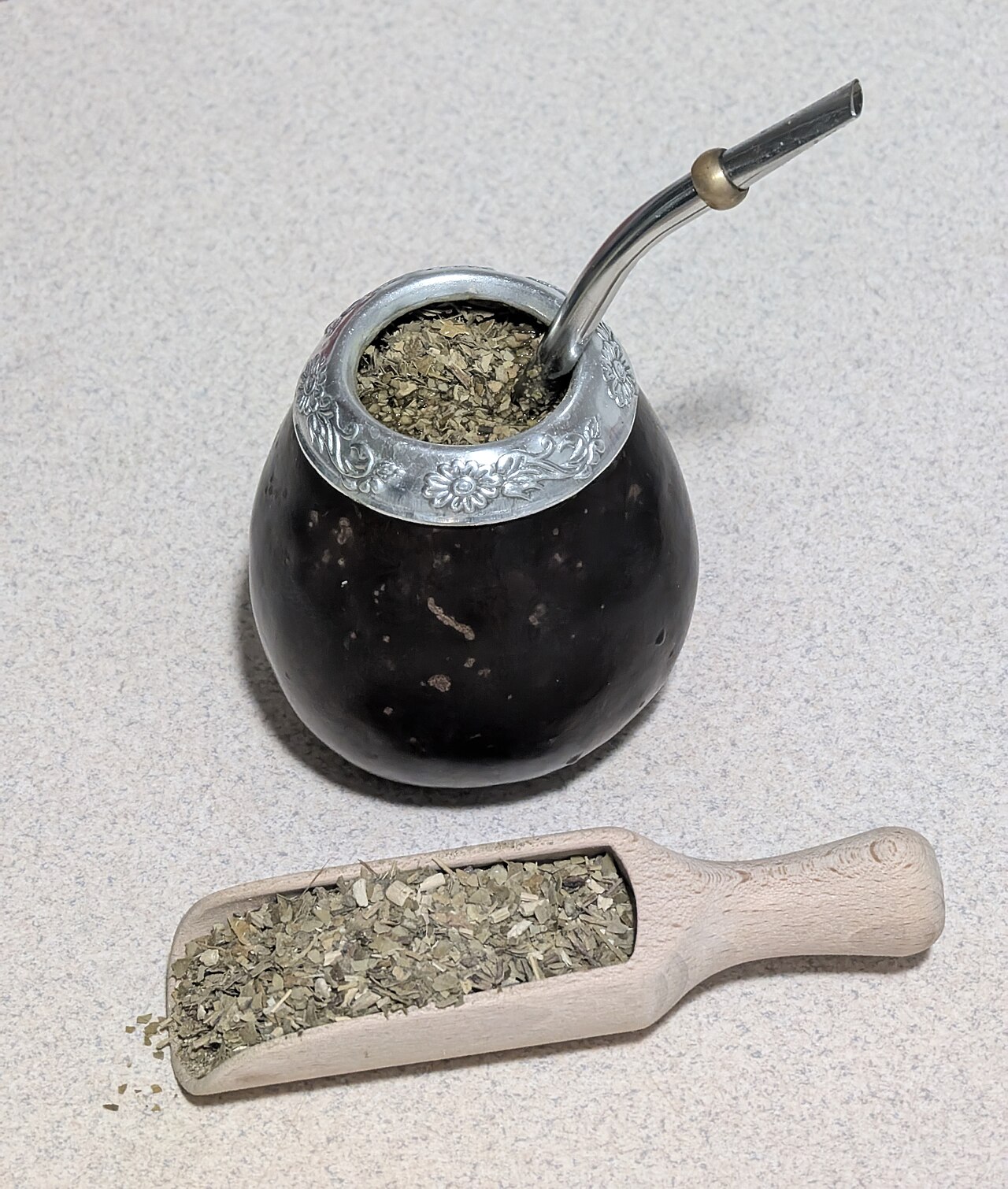
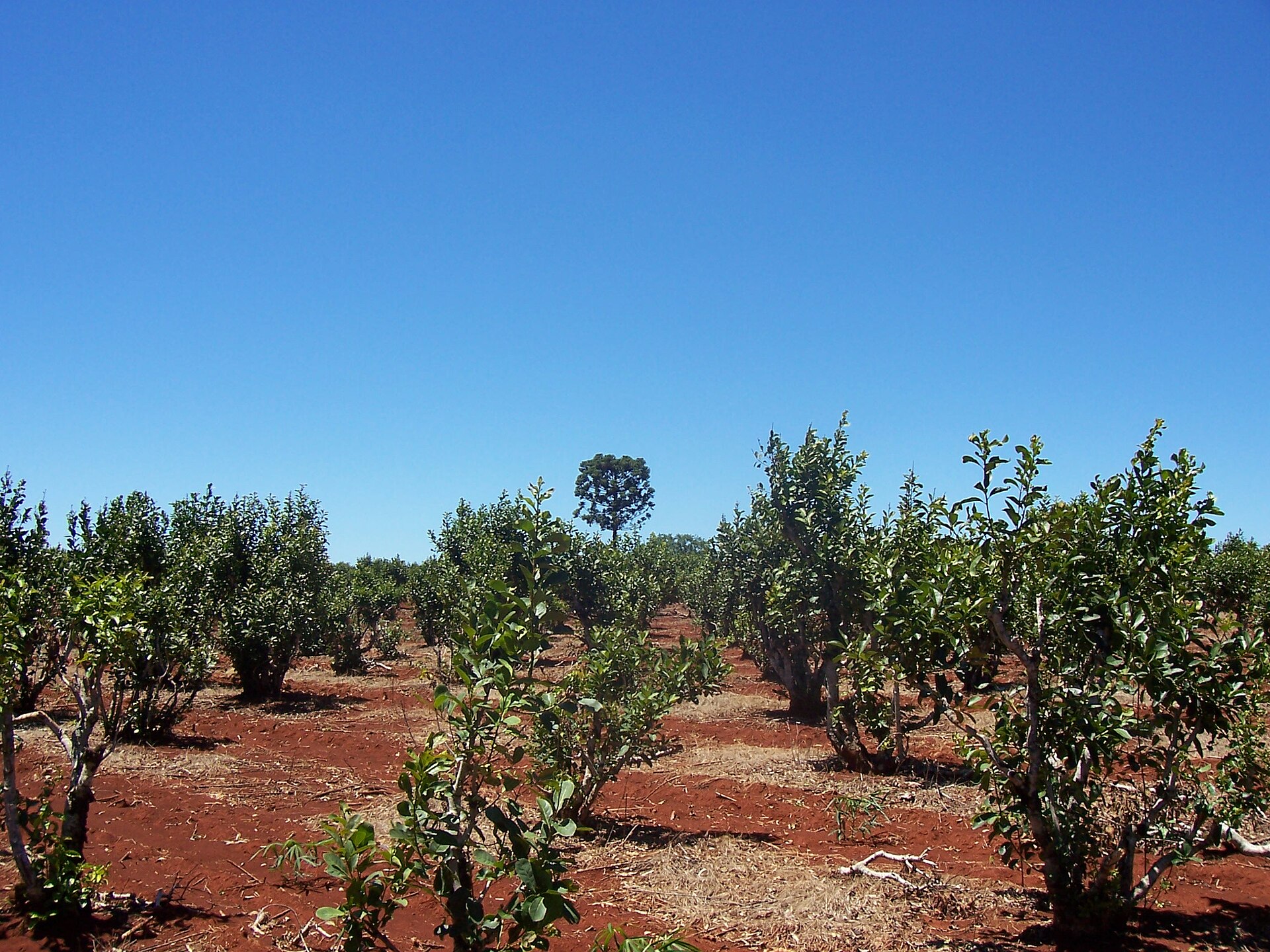
Yerba mate is made from Ilex paraguariensis, a holly native to the subtropical forests of southern South America. It is not Camellia sinensis, so it is not “tea” in the botanical sense. The English name “yerba mate” is used here for the plant and the drink; “mate” also refers to the gourd and to the social practice. The page treats the route as a mate corridor while keeping that botanical distinction clear.
History and background
Before European contact, Guaraní communities in the Paraná basin used yerba mate leaves. The drink was prepared in a gourd, drunk through a metal or bamboo straw, and shared in ceremonies and gatherings. The old Chinese record describes the plant as a sacred tree and tells a myth of the moon goddess and a jaguar. Those stories belong to Guaraní oral tradition; they are not historical evidence for the route’s age. What is clear is that mate was a regional practice long before the Spanish and Portuguese arrived.
In the sixteenth and seventeenth centuries, Spanish Jesuits established missions, or reducciones, in the region that is now Paraguay, Argentina and Brazil. The missions organised agriculture, crafts and trade, and yerba mate became one of their commercial products. The old record says the Jesuits discovered how to germinate mate seed by imitating the digestive process of birds, and that they established large plantations. The missions did develop managed mate production, but the “bird digestion” story is a simplified explanation of a difficult propagation problem; this page does not present it as a documented technique. The UNESCO mission sites preserve the urban and architectural context, not a complete mate factory.
The Jesuit expulsion from Spanish territories in 1767 disrupted the mission economy. The old record says the plantations were abandoned and production returned to wild gathering. That is broadly plausible: the missions lost their organised labour and markets, and wild collection remained important. The industry was later rebuilt by European immigrants and Argentine, Paraguayan and Brazilian producers in the nineteenth and twentieth centuries. The exact sequence varied by district.
Yerba mate is consumed in several ways. In Argentina, Uruguay and southern Brazil, hot water is poured into a gourd packed with leaves and stems, and the drink is passed around. In Paraguay, tereré is made with cold water or ice and often mixed with herbs such as mint or cedrón. In Brazil, chimarrão uses a finely cut green mate and a characteristic gourd. These are regional preparations, not different tea types.
The social rules matter. The cebador, the person who prepares the mate, fills the gourd, drinks the first strong infusion and then refills it for the group. Each person finishes the gourd before passing it back. The shared gourd and straw are a sign of trust and friendship. The old record’s line that mate “does not distinguish rich from poor” is a cultural ideal; in practice, gourds, leaves and serving styles vary by class and region.
Route and scope
The eight recorded nodes are Puerto Iguazú (0 km, about 180 m), San Ignacio Mini (60 km, about 150 m), Posadas (300 km, about 120 m), Encarnación (310 km), Asunción (500 km, about 100 m), Corrientes (900 km, about 60 m), Montevideo (1,200 km, about 20 m) and Buenos Aires (1,500 km, about 25 m). The route follows the Paraná and Paraguay river corridors and then the Río de la Plata. Distances are historical estimates; modern roads and ferries do not follow the old trade line exactly.
Stations
The stations below use the same node_id as the route fact table. The map and elevation profile are reading aids, not a substitute for field data.
01 · Puerto Iguazú
Puerto Iguazú is the Argentine gateway to Iguazú Falls and the Misiones province. Misiones is the core of Argentine yerba mate production, and the red tierra colorada soil is part of the local landscape. The old record says the town has a mate museum showing Guaraní gathering and Jesuit planting. Misiones has mate museums and visitor farms, but the route page should not treat every local exhibit as a national archive. The falls and the surrounding Atlantic Forest are the region’s other heritage.
02 · San Ignacio Mini
San Ignacio Mini is one of the best-preserved Jesuit missions in Argentina and part of the UNESCO listing. The old record calls it the “cradle” of domesticated mate and says the site preserves a complete mate workshop and warehouse. The mission ruins preserve church, housing and workshop structures; the claim that a complete mate factory survives is too specific. The site is important for the mission economy, of which mate was one product among many.
03 · Posadas
Posadas is the capital of Misiones and a port on the Paraná. The old record describes it as a mate collection and shipping point, with a market that handles tens of thousands of tonnes. Posadas has a long river trade, but the “largest mate market in South America” and the tonnage figure are not supported by the sources used here. The city is a practical gateway to the Misiones plantations and to the Posadas–Encarnación crossing.
04 · Encarnación
Encarnación, in Paraguay, faces Posadas across the Paraná. It is a commercial and transport centre for the Itapúa department. The old record says the local mate has a smoky, strong profile and that tereré is the favourite drink. Paraguay is indeed a major tereré market, and the Encarnación area is part of the southern mate belt. The “smoky” description depends on the drying method and is not universal.
05 · Asunción
Asunción is the Paraguayan capital and a major mate and tereré market. The old record calls it the “capital of tereré” and describes street-side vendors and a mate museum. Asunción’s food culture includes tereré with herbs, and the city is a good place to see the difference between hot mate and cold tereré. The old record’s “most mate-centred capital in South America” is a tourism phrase, not a ranking.
06 · Corrientes
Corrientes is an Argentine province and city on the Paraná. The old record calls it the second-largest mate producing province and says the national mate festival is held here. Corrientes has mate production and a Fiesta Nacional del Mate, but the ranking and visitor numbers vary by year. The city is also known for its chamamé music and its river culture, which are part of the same regional identity.
07 · Montevideo
Montevideo is the Uruguayan capital and one of the most mate-centred cities in the world. The old record says Uruguay has the highest per-capita mate consumption and gives eight kilograms per person per year. That figure is widely repeated in Uruguayan tourism and mate literature, but it is not used here as a precise statistic because consumption estimates vary. What can be said is that mate is a daily habit across Uruguay, visible in parks, offices, buses and football grounds.
08 · Buenos Aires
Buenos Aires is the largest consumption market and the route’s final city. Mate is part of Argentine national identity, but its everyday use is regional and generational: it is more common in some provinces and social circles than in others. The old record says mate is everywhere “from the presidential palace to the shantytown.” That is rhetorical. San Telmo’s mate shops and cafés are a good place to see the modern retail side of the drink.
Trade teas
The corridor is associated with Argentine, Paraguayan, Brazilian and Uruguayan yerba mate, plus tereré. These are regional products and preparations of Ilex paraguariensis, not Camellia sinensis teas. The old record’s “trade tea” list mixes the plant, the drink and the iced preparation; this page keeps them separate.
Linked tea entries:
- Yerba mate
- Organic yerba mate
- Yerba mate with stems
- Stem-free yerba mate
- Flavoured yerba mate
- Tereré
- Mate cocido
Visiting note
The route crosses Argentina, Paraguay and Uruguay. Borders, ferries and bus routes should be checked before travel. The diagram is not a navigation aid. Mate is a shared drink; if you are offered a gourd, follow the local practice and do not treat it as a personal cup. The Jesuit sites are protected heritage; stay on marked paths.
Sources and status
This English article is a full English edition of the Chinese route record, checked against the UNESCO listing for the Jesuit missions, the official Argentine tourism portal and the Uruguayan tourism ministry portal. It is marked reviewed for bilingual source-check and claim-boundary purposes on 2026-11-22. The “thousands of years” origin claim, the “largest mate market” and “60 percent of production” figures, the eight-kilogram consumption figure and the “complete mate factory” description have been bounded or omitted because the accessible sources do not support them as precise facts.