Overview
The Wuyi–Pan’an ancient tea road is a highland route between the Wuyi Mountains of northern Fujian and the central Zhejiang town of Pan’an, continuing through Tiantai to Hangzhou. The shared table records seven nodes over about 480 kilometres: Tongmu Village, Xiamei, Qingyuan, Jingning, Pan’an, Guoqing Temple and Hangzhou. The old Chinese record gives a shorter figure of about 400 kilometres; the difference reflects route variants and the difficulty of measuring a mountain path.
The route is often described as a “tea and salt road.” Tea travelled north and east; salt, grain, cloth and manufactured goods travelled in the other direction. The corridor is also a cultural route: Wuyi rock tea, Zhengshan Souchong, She minority tea customs, Tiantai Buddhist tea culture and Hangzhou’s Longjing tea all sit along it. The diagram is a reading aid, not a modern walking guide.
History and background
Wuyi Mountain is the route’s first node and its best-known tea landscape. The UNESCO listing describes Mount Wuyi as a cultural and natural landscape of cliffs, river bends and ancient sites. The old record calls it the “ancestral home of oolong tea” and a sacred place of Chinese tea culture. Oolong production is indeed associated with the Wuyi–Fujian region, but the phrase “ancestral home” is a cultural claim, not a botanical one.
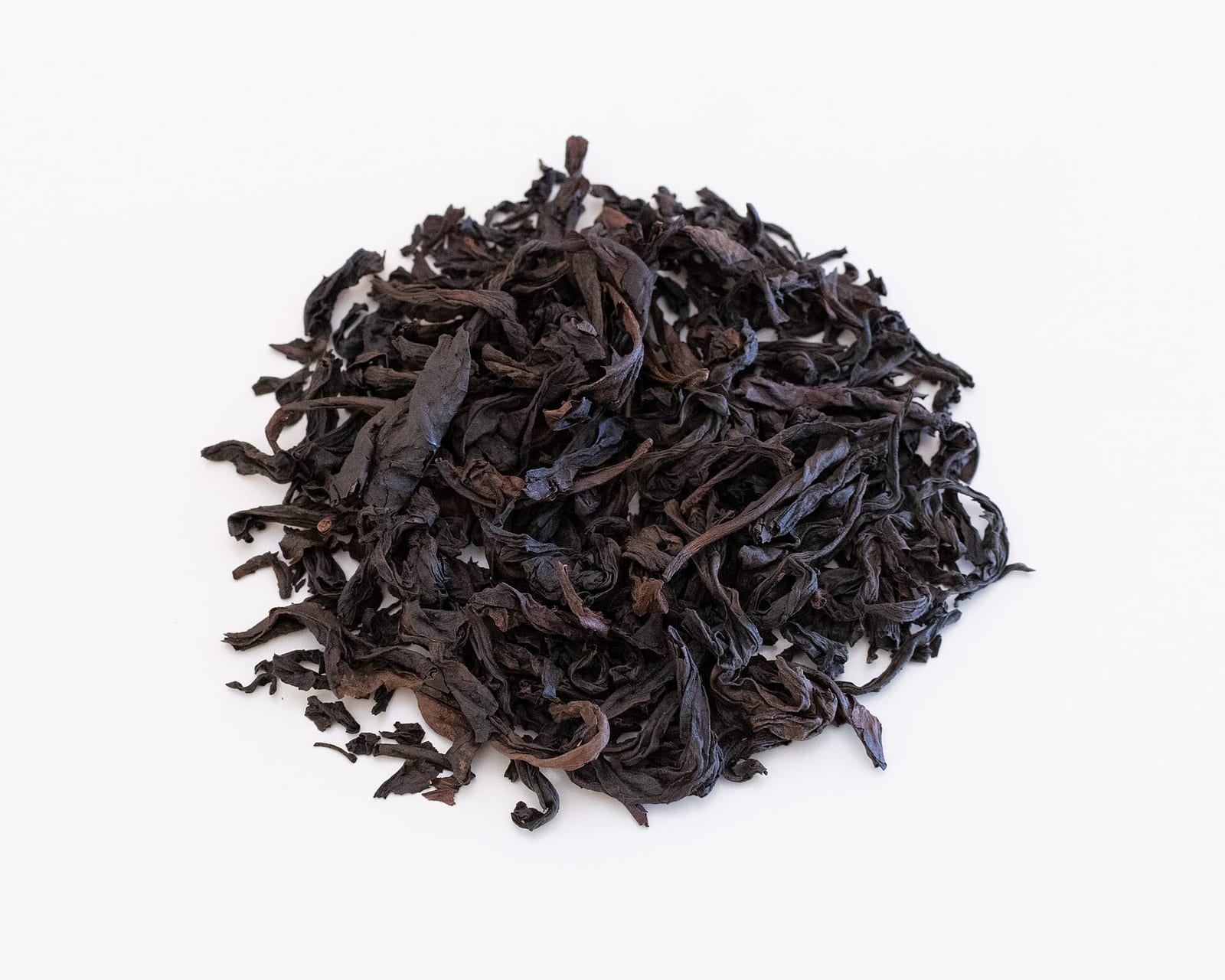
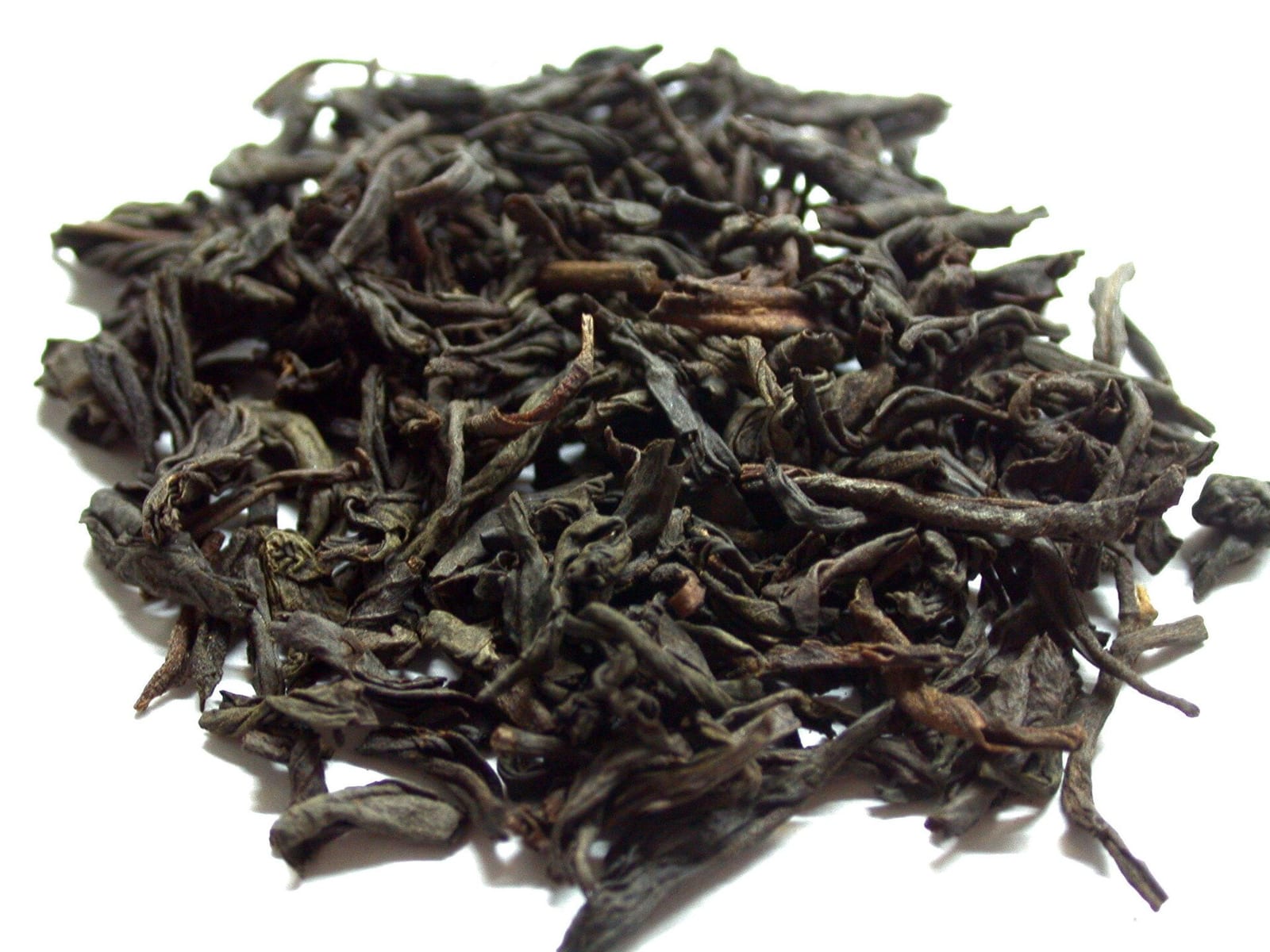
Tongmu Village, near the Fujian–Jiangxi border, is commonly associated with the origin of Zhengshan Souchong, the smoked black tea that later became known in export as Lapsang Souchong. The old record calls Tongmu the “birthplace of the world’s black tea.” That is a widely repeated local claim; it should be understood as a regional origin story, not as proof that all black tea began there.
Xiamei, the second node, is a village on the Nine-Bend River below Wuyi. The old record calls it the starting point of the “Great Tea Road” and mentions a stone marker and the Chang family of Shanxi merchants. Xiamei was indeed a tea trading village, and the Chang family is associated with the northbound tea trade. The connection between Xiamei and the long Russian tea route is a later trade history; the Wuyi–Pan’an route is a regional feeder, not the same thing as the Great Tea Road.
Qingyuan, Jingning and Pan’an form the Zhejiang highland section. Qingyuan is known for mushrooms and forest products; the old record says tea merchants travelled with mushroom traders. Jingning is a She autonomous county with its own tea songs and “three cups of tea” hospitality. Pan’an sits at the centre of the route and is the source of the “72 tea pavilions” story.
The tea pavilions are the route’s most distinctive cultural memory. The old record says that local benefactors built 72 pavilions on the high trails, each offering free tea to travellers, and that villagers took turns supplying the tea. The number 72 is a traditional figure; it should not be read as a verified count. Some pavilion sites and ruins remain, and the tradition is part of Pan’an’s local heritage. The old record’s claim that a particular couplet is “still clearly legible after centuries” is a literary description, not a conservation report.
Tiantai Mountain and Guoqing Temple represent the Buddhist tea strand. Tiantai is associated with the development of tea culture in Buddhist monasteries; Guoqing Temple has a long history and a tea hall tradition. The old record says that “men of letters on the tea road would make a pilgrimage here.” That is a cultural generalization. The temple is a real heritage site, and its tea culture should be described through its own history rather than through the route’s promotional language.
Hangzhou is the terminus. The old record says Wuyi rock tea was transferred here for the northern market and that Longjing and Wuyi tea “met” in the city’s teahouses. Hangzhou was a major canal city and a tea market; the Grand Canal connected it to the Yangtze and the north. The meeting of different teas in Hangzhou’s teahouses is plausible, but the old record’s literary image of Su Dongpo should not be treated as a historical event.
Route and scope
The seven recorded nodes are Tongmu Village (0 km, about 1,100 m), Xiamei (80 km, about 400 m), Qingyuan (180 km, about 350 m), Jingning (230 km, about 500 m), Pan’an (300 km, about 550 m), Guoqing Temple (380 km, about 150 m) and Hangzhou (480 km, about 50 m). The route crosses the Wuyi–Zhejiang highlands, then descends to the Tiantai basin and the Hangzhou plain. Some sections are now roads; the old stone paths survive only in fragments.
The old record calls the route moderately difficult: rough mountain paths, many streams and waterfalls, and a height range from about 200 to 1,200 metres. It gives a distance of about 400 km, a one-way time of 15–20 days, and a recommended season from March to May or September to November, when the new tea is being made and the mountain weather is milder. The station table’s cumulative figure is about 480 km; the two numbers come from different old measurements and should not be treated as a modern survey.
Stations
The stations below use the same node_id as the route fact table. The map and elevation profile are reading aids, not a substitute for field data.
01 · Tongmu Village
Tongmu is a forest village in the Wuyi Mountains, near the Fujian–Jiangxi border. The old record describes ancient tea trees growing among bamboo and calls the village the source of Zhengshan Souchong. The village is also a gateway to the Wuyi nature reserve. Visitors should respect private tea gardens and the reserve’s rules; the old route is not a public trail through every garden.
02 · Xiamei
Xiamei is a river village at the edge of the Wuyi scenic area. Its old streets, ancestral halls and stone marker are part of the local tea trade heritage. The village is associated with the northbound tea merchants, including the Chang family. The “Great Tea Road starting point” label is a tourism and heritage brand; it is accurate for the village’s role in the trade network, but not for the entire route’s geography.
03 · Qingyuan, Zhejiang
Qingyuan is the southernmost county of Zhejiang and a forested mountain area. The old record calls it the “hometown of Chinese mushrooms” and says tea merchants and mushroom merchants travelled together. The pairing is a local trade pattern; it does not mean that every tea caravan carried mushrooms. The county’s highland villages and covered bridges are part of the route’s landscape.
04 · Jingning She Autonomous County
Jingning is a She minority county. The old record describes She women singing tea songs and a “three cups of tea” custom: one to welcome, one to talk, one to say goodbye. Those are cultural descriptions that vary by village and family. The county is a good place to learn about She tea practice, but the visitor should not expect a staged performance at every stop.
05 · Pan’an
Pan’an is the route’s central hub. The old record calls it “the ancestor of mountains and the source of rivers” and describes the 72 tea pavilions on Gaolao Mountain. Pan’an’s local tea, Pan’an Yunfeng, is a highland green tea. The county’s tea-and-salt trails, pavilion sites and old villages are the core of the route’s heritage. The 72 figure is traditional; the surviving sites are fewer.
06 · Guoqing Temple, Tiantai Mountain
Guoqing Temple is one of the great Tiantai Buddhist monasteries. The old record says it had a tea hall for monks and that travellers on the tea road came to pay respects. Tiantai Buddhism and tea culture are closely connected, but the temple’s tea hall should be described through its own records, not through the route’s promotional narrative.
07 · Hangzhou
Hangzhou is the terminus and a major tea city. Longjing tea is produced in the surrounding hills, and the city’s teahouses and canal trade made it a distribution point. The old record says Wuyi rock tea was transferred here to the north. That is plausible for the canal network, but the volume and timing are not documented in the accessible sources. The city is best understood as a market and transport hub, not as the route’s single destination.
Trade teas
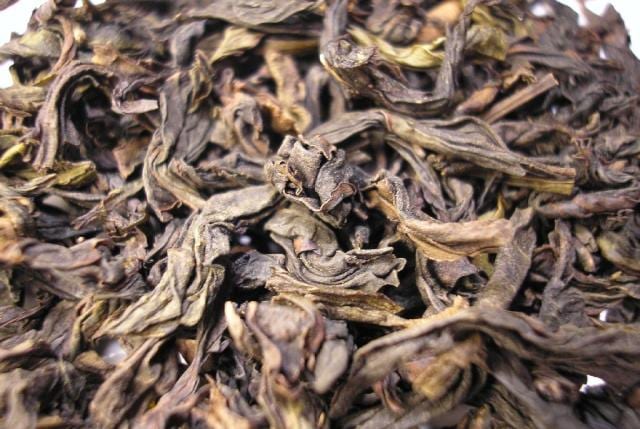
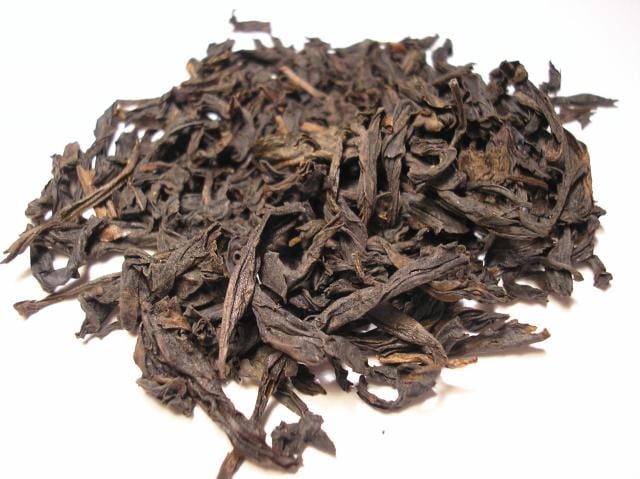
The route is associated with Wuyi rock tea (Dahongpao, Rougui, Shuixian), Zhengshan Souchong, Pan’an Yunfeng and Longjing. These are broad categories. A route association does not mean that all of them were produced at every node. Zhengshan Souchong is a black tea from Tongmu; Wuyi rock tea is an oolong from the Wuyi cliffs; Longjing is a pan-fired green tea from Hangzhou. The old record’s list mixes them as a trade mix.
Linked tea entries:
Visiting note
The route is a historical network, not a preserved long-distance trail. Wuyi, Xiamei, Qingyuan, Jingning, Pan’an, Tiantai and Hangzhou are reachable by road or rail, but the old mountain sections are fragmented and sometimes on private land. The diagram is not a navigation aid. Visitors should ask local guides and garden owners before entering tea fields or pavilion ruins.
Sources and status
This English article is a full English edition of the Chinese route record, checked against UNESCO’s Mount Wuyi listing, the Fujian provincial government portal and the Pan’an county government portal. It is marked reviewed for bilingual source-check and claim-boundary purposes on 2026-11-22. The 72-pavilion count, the 5,000-dan export figure and the “world’s black tea birthplace” claim in the old record have been framed as local tradition or broad cultural statements rather than measured facts.