Chapu editorial illustration · CC BY-SA 4.0The Dutch VOC Tea Route
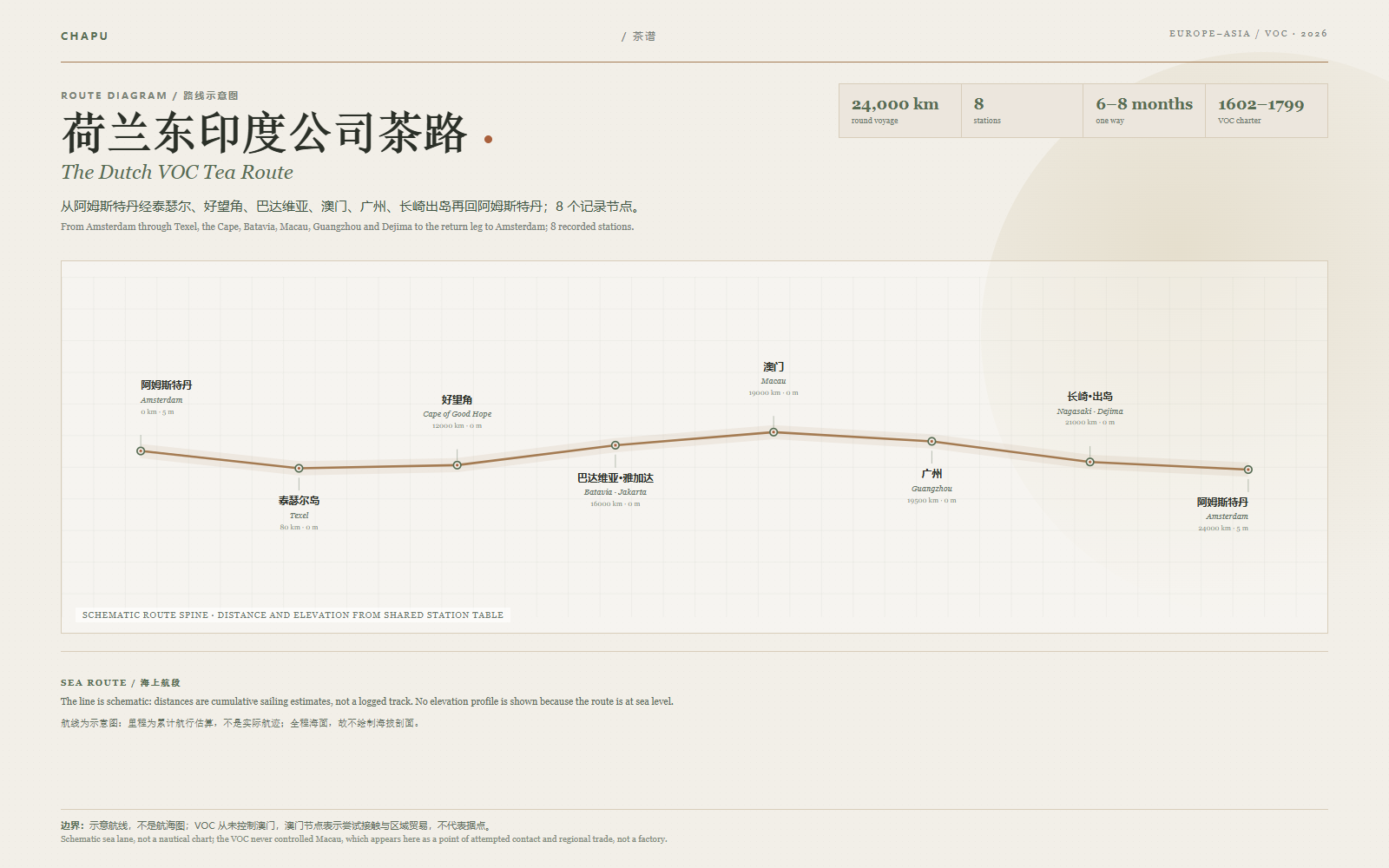
The Dutch East India Company’s maritime tea route linking Amsterdam, the Cape, Batavia, Chinese ports and Nagasaki’s Dejima.
Tea routeEnter routes, stations and trade histories associated with Intercontinental.
Chapu editorial illustration · CC BY-SA 4.0The Dutch East India Company’s maritime tea route linking Amsterdam, the Cape, Batavia, Chinese ports and Nagasaki’s Dejima.
Tea route
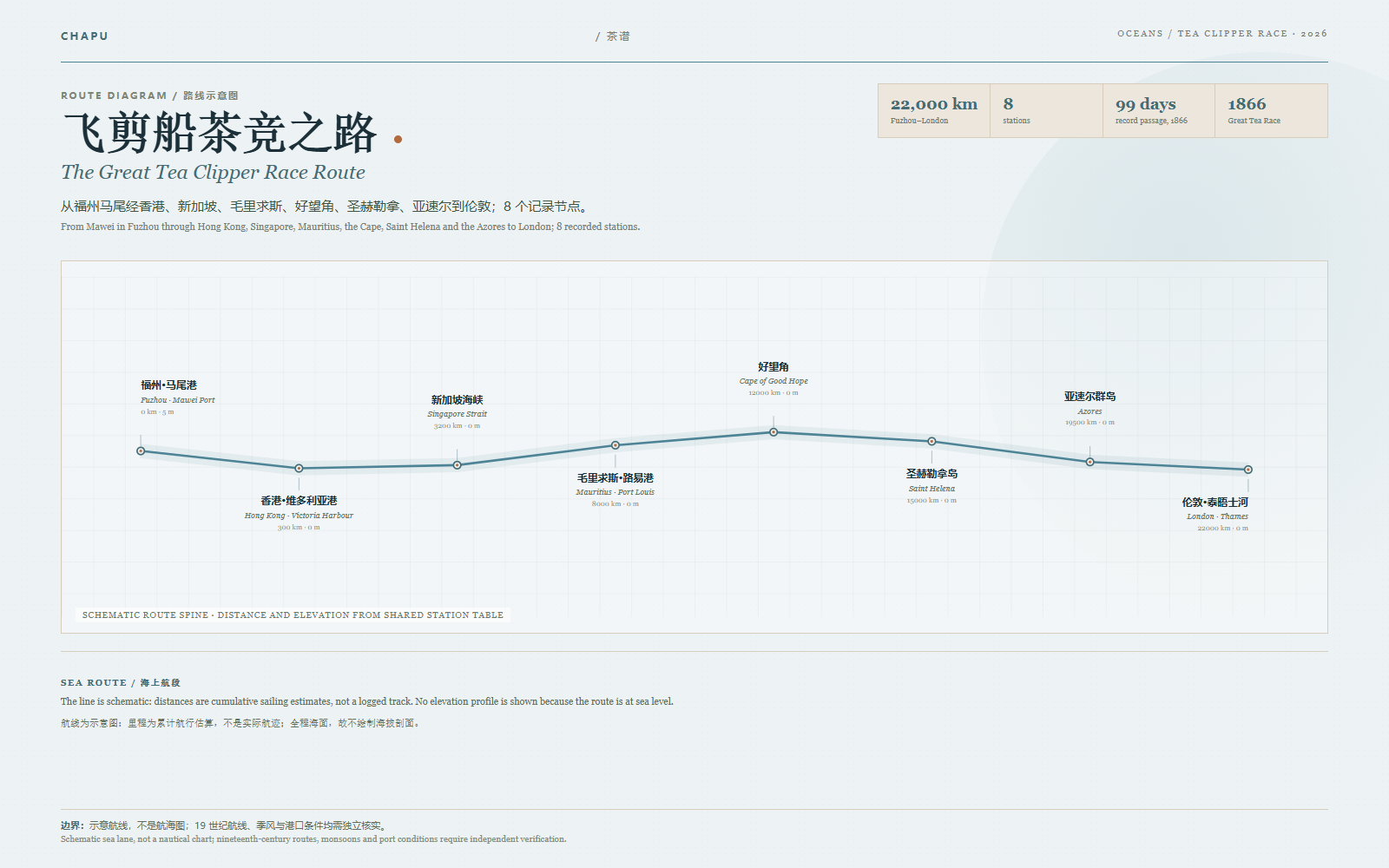
Chapu editorial illustration · CC BY-SA 4.0The nineteenth-century tea clipper race: fast sailing ships carrying new-season tea from Fuzhou to London, and the 1866 contest that became a legend.
Tea route
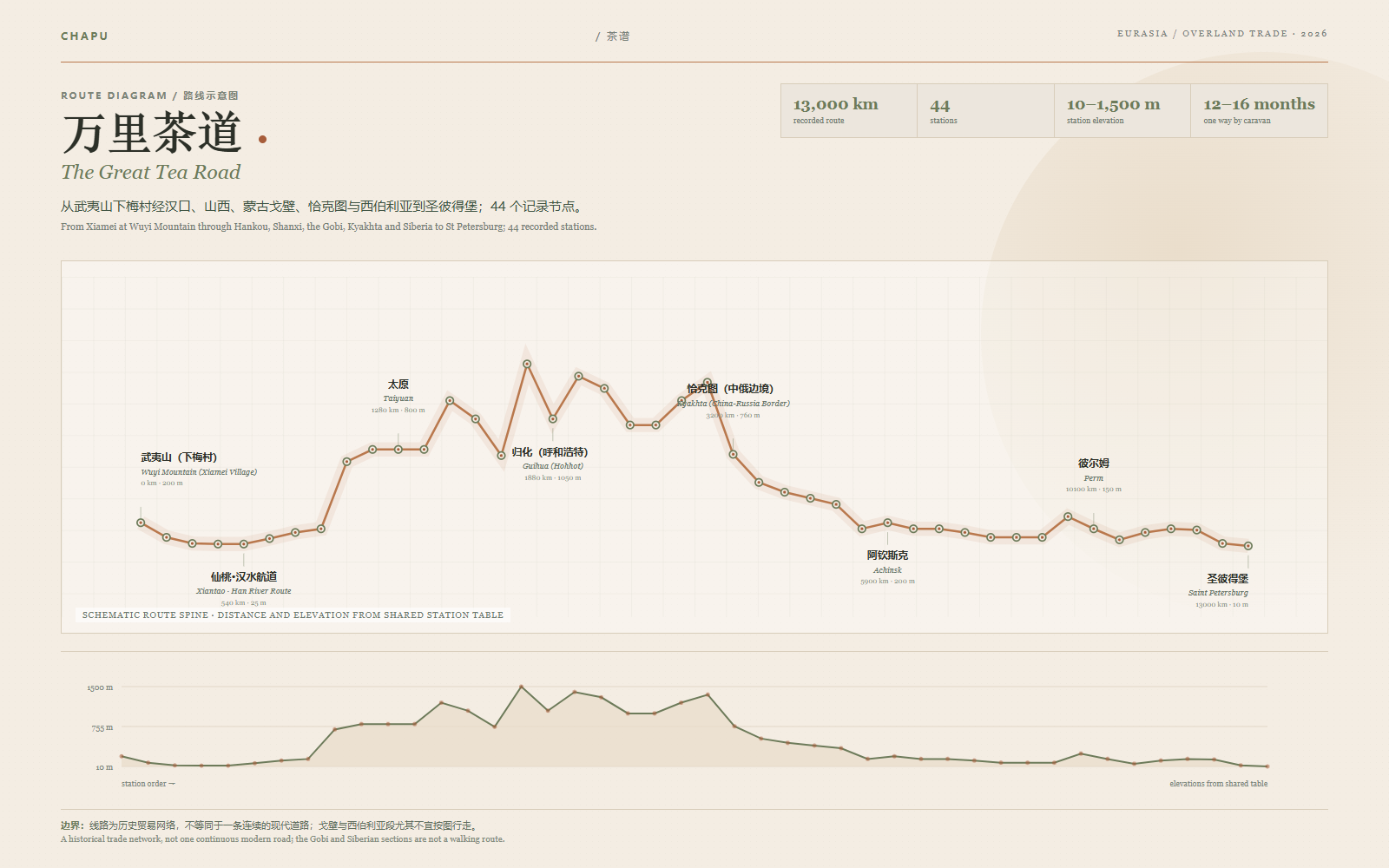
Chapu editorial illustration · CC BY-SA 4.0The overland tea trade from Fujian and the Chinese interior across Mongolia to Siberia and European Russia, centred on the Kyakhta market and managed largely by Shanxi merchants from the late seventeenth to the early twentieth century.
Tea route
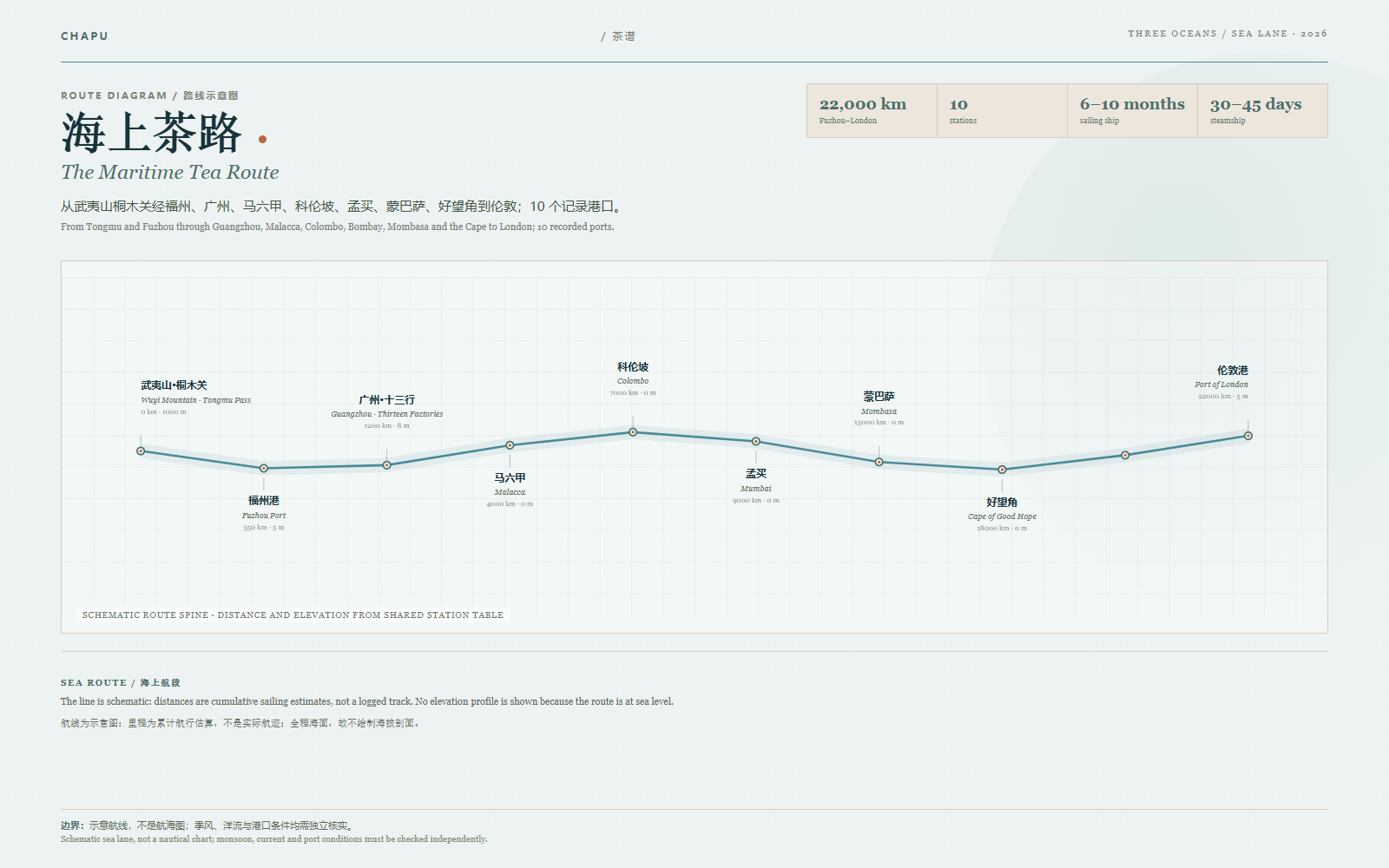
Chapu editorial illustration · CC BY-SA 4.0The sea route that carried Chinese tea from Fujian and Guangdong to Southeast Asia, Europe and the Americas, and later linked the tea gardens of India, Ceylon and Kenya to global markets.
Tea route
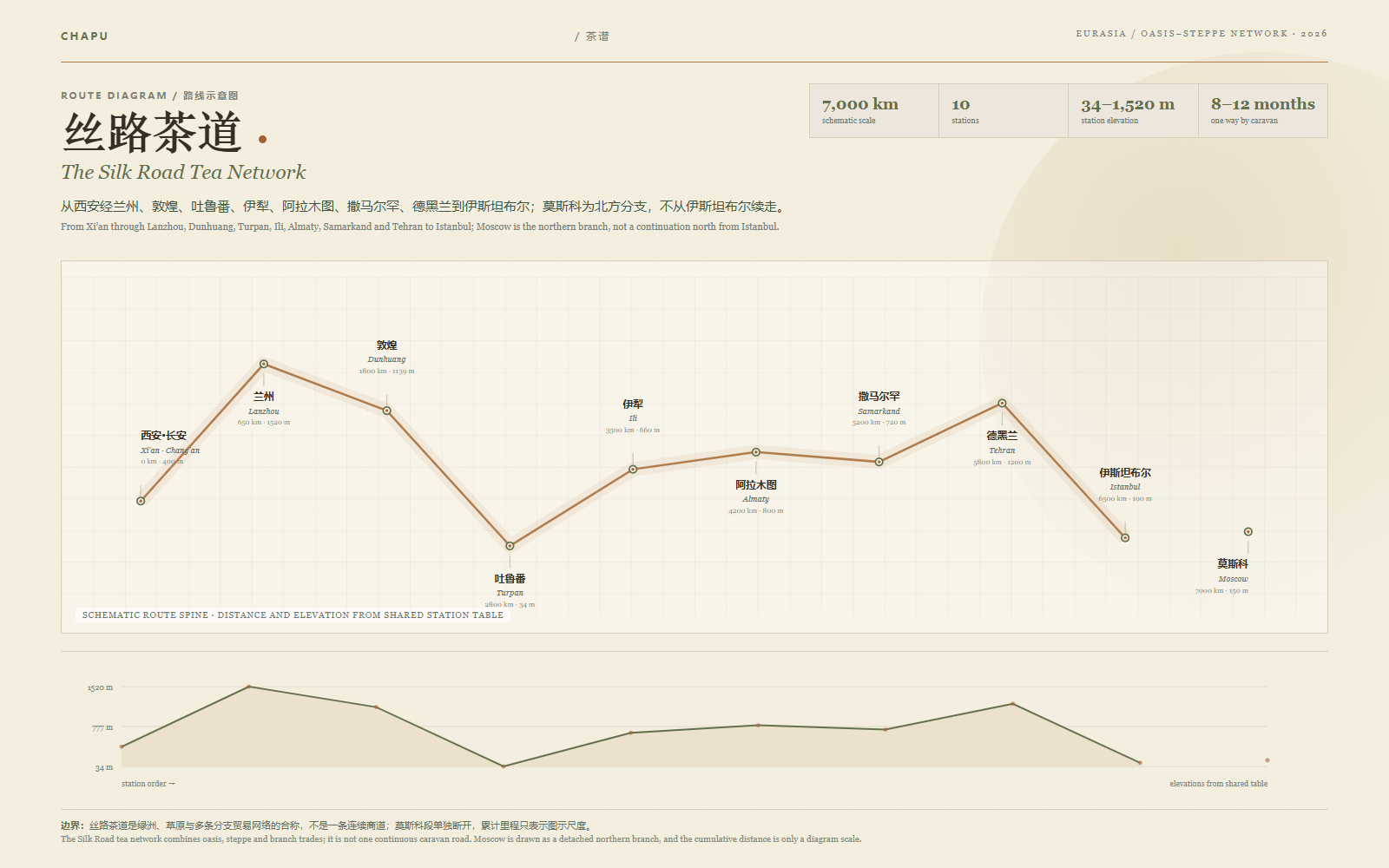
Chapu editorial illustration · CC BY-SA 4.0Tea moved through the oasis, steppe and maritime networks we call the Silk Road, but there was no single caravan road from Xi'an to Moscow. This article uses compressed brick tea to follow three separate branches: Central Asia and Persia, the Ottoman west, and the Kyakhta-Siberian north.
Tea route